You’re still under 20g of carbs. You haven’t touched sugar in months. Your food diary is basically a spreadsheet at this point. And the scale hasn’t moved in five, six, maybe ten weeks. If you have PCOS, you already know how loud that silence is — because when keto stops “working,” it doesn’t just feel like a diet stall, it feels like your body is proving every doubt you’ve ever had about it right.
I want to say this clearly before anything else: a keto diet PCOS plateau breakthrough doesn’t usually come from eating less or trying harder. It comes from understanding why a hormonally-driven body behaves differently than a textbook calorie-in-calorie-out model predicts — and then adjusting the right lever, not just the loudest one.
I stalled twice during my own 40kg PCOS weight loss journey, once around the 3-month mark and once past the halfway point. Both times, cutting calories further made things worse, not better. What actually broke each plateau had almost nothing to do with willpower and everything to do with hormones I wasn’t paying attention to yet. That’s what this guide is about.
Medical Disclaimer: This article combines my personal experience with current research on keto, PCOS, and metabolic adaptation. It’s for educational purposes only and isn’t a substitute for advice from your GP, endocrinologist, or a registered dietitian, especially if you’re also managing thyroid disease, disordered eating history, or fertility treatment alongside PCOS.
What Counts as a “Real” Keto PCOS Plateau
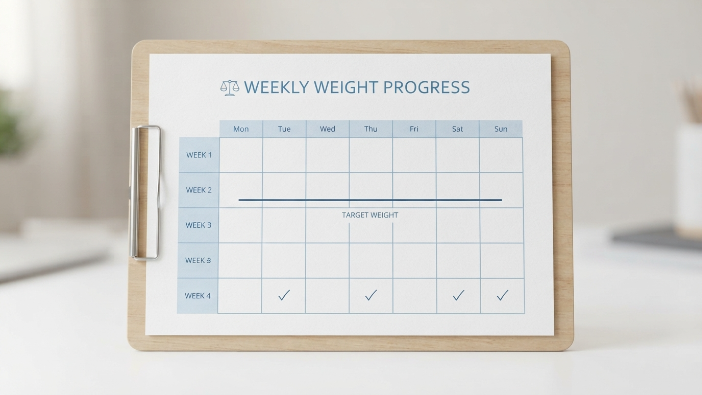
Before troubleshooting, it’s worth defining the thing. A weight-loss plateau is generally understood as a stall of roughly 3–4 weeks or more where weight isn’t moving despite consistent adherence to diet and activity — not a single bad week, and not normal week-to-week water fluctuation.
With PCOS specifically, plateaus tend to show up in two distinct patterns:
- The early plateau (weeks 2–8): Often related to water, electrolytes, and the adjustment of insulin and cortisol to a new way of eating.
- The later plateau (month 3 onward): More often driven by metabolic adaptation, unaddressed insulin resistance, or accumulated stress load — the hormonal terrain, not the diet itself.
Knowing which one you’re in changes what’s actually worth fixing.
Why PCOS Makes Plateaus More Common (and More Stubborn)
From My Research: Every time I dug into why PCOS plateaus feel so much more resistant than a “normal” stall, the research kept pointing back to the same handful of interconnected systems. It’s rarely just one thing.
Insulin Resistance Is Still the Root Driver
Roughly 7 in 10 women with PCOS deal with some degree of insulin resistance. It’s the thread running through basically everything else on this list. Keep insulin chronically elevated and your body gets locked into fat-storage mode — it just doesn’t want to let go, no matter how few carbs are on your plate that day.
Keto goes after the carbohydrate side of that equation, sure. But stress, bad sleep, inflammation — those can all keep insulin up through completely separate pathways. Which is exactly how someone can be doing everything “right” on keto and still not budge.
Androgen Levels and Fat Storage Patterns
Elevated androgens (testosterone, mainly) do more than affect skin and hair. A 2020 study by Merra and colleagues in the Journal of Translational Medicine put women with PCOS on a ketogenic Mediterranean-style diet for 12 weeks, and testosterone and luteinising hormone dropped alongside real weight loss, while progesterone and oestrogen improved.
What I take from that: hormones and weight tend to move together. So when your hormone picture is stuck, don’t be surprised if the scale is too — even if nothing about your eating has changed.
Cortisol: The One Almost Nobody Checks

I underestimated this one badly in my own journey. Chronic stress keeps cortisol up, cortisol pushes blood sugar up, blood sugar pushes insulin up — and now you’re fighting the exact thing keto is supposed to fix.
Women with PCOS seem to feel this loop harder than most, likely because the insulin resistance already there leaves less room to absorb a stress spike.
My Practical Observation: My second plateau didn’t break because I changed a macro. It broke because I started actually sleeping seven-plus hours a night, and I quit the fasted, high-intensity morning workouts I didn’t realize were quietly wrecking my cortisol.
Thyroid Function — the Overlap Nobody Warns You About
Autoimmune thyroid disease shows up more often in women with PCOS than in the general population, and even mild, sub-clinical thyroid dysfunction can slow your metabolism enough to stall progress on its own.
Six to eight weeks stuck with no clear reason? Worth bringing up with your GP — ask for fasting insulin and HOMA-IR alongside the usual TSH, not just TSH on its own.
Leptin, Ghrelin, and “Metabolic Adaptation”
You’ve probably heard “your body fights weight loss” thrown around like a cliché. It isn’t one. As you lose weight, leptin (satiety) drops, ghrelin (hunger) climbs, and your resting metabolic rate falls further than your smaller body would explain on its own — researchers call this adaptive thermogenesis.
Reviews in the American Journal of Clinical Nutrition and Obesity Reviews put the extra drop in resting energy expenditure somewhere around 5–15%. That’s the real reason “just eat less, move more” quietly stops working the deeper you get into a weight-loss journey.
Gut Microbiome and Low-Grade Inflammation
There’s growing research tying PCOS to lower gut microbial diversity and higher systemic inflammation, both linked to worse insulin sensitivity. This one’s still an emerging area, not a settled fact — but it’s part of why two women eating the exact same keto macros can see completely different results.
Keto PCOS Plateau Causes at a Glance
| Cause | What’s Happening | Typical Timing |
| Metabolic adaptation | Resting metabolic rate drops below what weight loss predicts | Month 3+ |
| Unmanaged cortisol/stress | Chronic stress keeps insulin elevated despite low carbs | Any point |
| Hidden carbs / portion creep | “Keto” foods eaten in larger amounts than tracked | Weeks 4–12 |
| Under-eating protein | Insufficient protein blunts satiety and preserves less muscle | Ongoing |
| Poor sleep | Disrupts leptin/ghrelin balance and insulin sensitivity | Any point |
| Untreated thyroid issue | Lowers baseline metabolic rate independent of diet | Any point |
| Electrolyte/water shifts | Masks fat loss on the scale short-term | Weeks 1–4 |
| Excess stress-driven exercise | Elevates cortisol, counteracts insulin benefits | Any point |
Expert Tips to Break a Keto PCOS Plateau

I don’t think it’s honest to present my own experience as the whole picture, so here’s what qualified professionals actually say.
Dr. Ula Abed Alwahab, MD
Endocrinologist, Cleveland Clinic In discussing the mechanism behind low-carb approaches for PCOS, Dr. Abed Alwahab has explained that the connection between insulin resistance and PCOS is extremely well established, and that improving insulin resistance is central to reducing many PCOS symptoms and complications, including weight, blood pressure, and fertility outcomes.
Why it matters: This confirms that insulin — not calories in isolation — is the primary lever for PCOS-specific weight loss, which is exactly why generic calorie-cutting during a plateau tends to underperform.
Amber Fischer
Functional Nutrition Practitioner specializing in PCOS Fischer’s published guidance recommends targeting roughly 20–35g of protein per meal to balance insulin and hunger signals, alongside at least 35g of fiber daily to support gut health and sex-hormone-binding globulin (SHBG).
Why it works: Protein and fiber both blunt insulin response and extend satiety, directly counteracting two of the biggest plateau drivers — under-eating protein and blood sugar swings from low-fiber “clean keto” foods.
Registered Dietitian guidance
The PCOS Plate A published registered dietitian’s clinical perspective cautions that strict, prolonged ketosis carries real risks for some women — including disordered eating triggers and nutrient gaps — and that a more moderate, fiber-forward, protein-rich approach is often more sustainable long-term.
Why it matters: This is the counterweight I think every keto-for-PCOS article owes its readers. Not everyone should push through a plateau by going more restrictive; for some women, the more honest answer is loosening rigidity, not tightening it.
Real Research Case Studies
Frontiers in Nutrition, 2023–2024 Fertility Studies
A small cohort of women with PCOS trying to conceive followed a ketogenic diet, and researchers found that all participants regained regular menstrual cycles within roughly three months, with over half of those actively trying to conceive achieving pregnancy within the study window.
A related 2024 brief report noted that early improvements in insulin and HOMA-IR (70+ days in) outpaced the percentage of weight-loss effect achieved in the same window — suggesting insulin sensitivity often improves before the scale reflects it.
Why it matters: If your cycle is regularizing or your energy and cravings are improving while your weight holds steady, that’s not your body ignoring the diet — the research suggests that’s frequently the expected order of operations.
Practical lesson: Don’t judge a keto PCOS plateau by the scale alone. Track cycle regularity, energy, and cravings as equally valid markers of progress.
How to Actually Break a Keto PCOS Plateau: Step-by-Step

One Mistake I See Often: The instinctive response to a plateau is to cut calories or carbs further. With PCOS, that frequently backfires — deeper restriction raises cortisol, which raises blood sugar, which can stall you harder. Address these in order before you touch your macros again.
1. Audit for Hidden Carbs and Portion Creep
Recalculate net carbs on your “safe” staples — nut-based flours, dairy, sauces, and processed keto snacks are the most common places 5–10g creeps in unnoticed per meal. A two-week return to precise weighing (not eyeballing) resolves more plateaus than any macro overhaul.
2. Hit Your Protein Target, Not Just Your Fat Target
Aim for roughly 1.2–1.6g of protein per kg of body weight, or the 20–35g-per-meal range referenced by PCOS nutrition specialists above. Protein preserves lean mass during a deficit, which protects your resting metabolic rate — one of the few plateau levers with strong, consistent research support.
3. Rebuild Sleep Before You Rebuild Your Meal Plan
Just one week of restricted sleep measurably reduces insulin sensitivity in research on healthy adults, and PCOS appears to amplify this sensitivity. Seven to nine hours, consistent bedtime, is a genuinely underused plateau-breaker.
4. Address Cortisol Directly
Reduce fasted high-intensity training if you’re doing it daily, add 10–15 minutes of daily low-intensity movement (walking counts), and treat stress management — even simple breathing practice — as a metabolic intervention, not a wellness extra.
5. Consider a Strategic Diet Break or Carb Cycling
For plateaus past month 3, a short, structured 1–2 week maintenance-calorie “diet break,” or cycling slightly higher carbs (from fibrous, low-glycemic sources) around your highest-activity days, can help counter adaptive thermogenesis without abandoning the ketogenic framework. This should be planned, not improvised.
6. Check Electrolytes and Water Intake
Low sodium, magnesium, or potassium can cause fatigue and water retention that masks fat loss on the scale. Most keto plateaus in the first month are at least partly electrolyte-related.
7. Get Bloodwork, Not Just a Body-Weight Reading
Fasting insulin, HOMA-IR, TSH with free T3/T4, and a full lipid panel give you an objective read on whether your metabolic markers are improving even if the scale isn’t — which, per the case studies above, is a common and expected pattern.
If I Were Starting Again: I’d track fasting insulin and cycle regularity from week one, not just weight. Weight was the slowest-moving, least honest signal of whether keto was actually working for my PCOS.
Foods That Help vs. Foods That Stall Progress
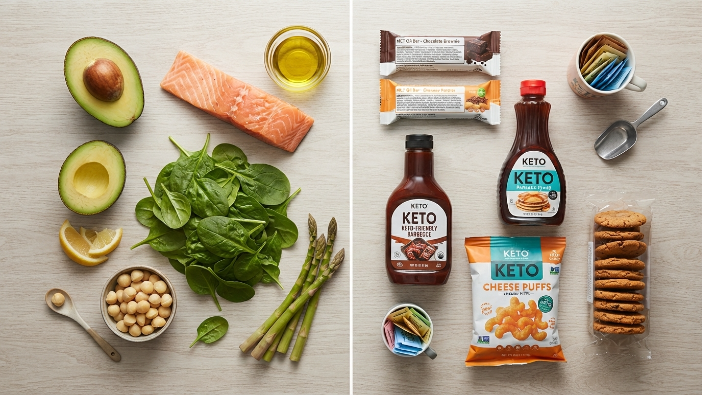
| Support the Plateau Breakthrough | Commonly Stall Progress |
| Fatty fish (salmon, mackerel, sardines) — omega-3s, anti-inflammatory | Processed keto snack bars — hidden sugar alcohols, easy to overeat |
| Leafy greens, cruciferous veg — fiber, low glycemic load | “Keto” baked goods with almond/coconut flour in large portions |
| Pasture-raised eggs, lean poultry — high satiety protein | Heavy cream and cheese in excess — easy to overconsume calories |
| Olive oil, avocado — supports hormone synthesis without spiking insulin | Artificial sweeteners in large daily amounts — mixed research on insulin response |
| Berries in moderation — antioxidants, lower glycemic impact than most fruit | Alcohol, even “keto-friendly” spirits — disrupts sleep and cortisol |
| Fermented foods — gut microbiome support | Excess caffeine — can elevate cortisol in sensitive individuals |
Common Keto Mistakes That Cause PCOS Plateaus
| Mistake | Why It Backfires | Better Approach |
| Cutting calories further at the first sign of a stall | Increases cortisol, can worsen insulin resistance | Address sleep, stress, and protein first |
| Ignoring fiber because “it’s a carb” | Slows gut motility, worsens blood sugar swings | Prioritize fibrous, low-glycemic vegetables within your carb allowance |
| Daily fasted intense workouts | Chronic cortisol elevation counteracts insulin benefits | Mix in walking and strength training; limit fasted HIIT |
| Treating the scale as the only metric | Misses hormonal and cycle-based progress | Track insulin markers, cycle regularity, energy, measurements |
| Copy-pasting a generic keto macro split | Doesn’t account for PCOS-specific insulin/androgen needs | Prioritize protein and food quality within your carb target |
Final Thoughts: This Is a Hormone Problem, Not a Willpower Problem
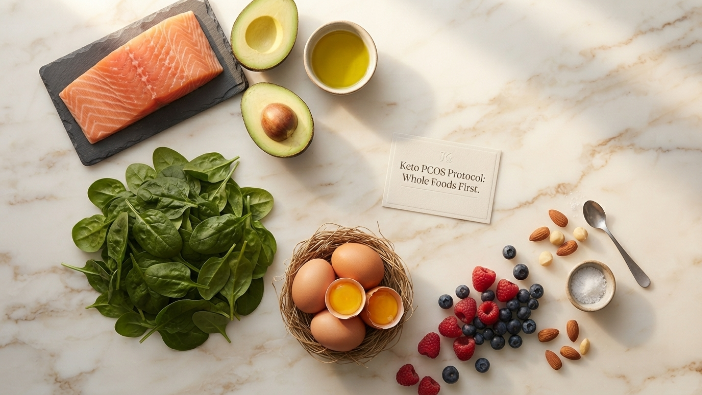
My Recommendation: If you take one thing from this article, let it be this — a keto diet PCOS plateau breakthrough almost never comes from restricting harder. It comes from working out which hormonal system (insulin, cortisol, thyroid, leptin/ghrelin) is actually holding the stall in place, and adjusting that specific lever.
Track more than the scale. Get bloodwork if you can. Protect your sleep like it’s part of the diet, because metabolically, it is. And if you’ve been doing everything “right” for months with nothing to show for it on the scale, that’s worth raising with your GP or a PCOS-literate dietitian, not a reason to assume keto has failed you.
I’ve written more about the full arc of my own PCOS and keto experience — including the plateaus, the setbacks, and what changed the trajectory — in my 40kg keto and PCOS journey, and in why PCOS weight loss is so hard in the first place. If you’re troubleshooting a stall right now, both are worth reading alongside this guide.
A Note: I’m not a doctor. This article combines my personal experience with published research, and it’s meant to help you ask better questions of your own healthcare provider — not to replace their advice.
Frequently Asked Questions
What is a keto plateau caused by hormones?
It’s a stall driven by insulin resistance, elevated cortisol, thyroid changes, or adaptive shifts in leptin and ghrelin — rather than by an error in diet adherence.
How long do keto PCOS plateaus usually last?
Most resolve within 2–6 weeks once the underlying driver (sleep, stress, hidden carbs, protein intake) is addressed; those tied to metabolic adaptation after significant weight loss may need a structured diet break to resolve.
How do I break a keto plateau with PCOS specifically?
Audit hidden carbs, hit your protein target, prioritize sleep, manage cortisol, consider a short structured diet break or light carb cycling, and check electrolytes — in that order, before cutting calories further.
Does insulin resistance cause keto plateaus?
Yes, it’s one of the primary drivers. Even in ketosis, chronic stress and poor sleep can keep insulin elevated through non-dietary pathways, which slows fat loss regardless of carbohydrate intake.
Can stress and cortisol really stall keto weight loss?
Yes. Chronic stress keeps cortisol elevated, which raises blood sugar and insulin — directly working against the mechanism keto relies on, and PCOS appears to heighten sensitivity to this cycle.
Is it normal for keto to work great for months and then stop?
Yes — this pattern is consistent with metabolic adaptation, where resting energy expenditure falls beyond what weight loss alone predicts, typically becoming noticeable from around the third month onward.
Do I need to test my blood sugar or insulin to break a plateau?
It isn’t required, but fasting insulin and HOMA-IR give an objective read on whether your PCOS is actually improving, even during weeks when the scale doesn’t move.
Should I try intermittent fasting to break a keto PCOS plateau?
It can help some women, but PCOS-specific guidance is mixed, since fasting can also raise cortisol in sensitive individuals. It’s worth trialling cautiously and tracking energy and cycle response rather than assuming it will help.