Medical disclaimer: I’m a nutritionist, not a doctor, and nothing in this article replaces personalised medical advice. It’s written for general education, drawing on peer reviewed research and guidance from recognised health bodies, but it can’t account for your individual health history. If you have diabetes, take insulin or another glucose lowering medication, are pregnant or breastfeeding, have a history of disordered eating, kidney disease, or a food allergy, please check with your GP, endocrinologist or a registered dietitian before making significant changes to what you eat.
You’re standing at the counter at seven in the morning, blender lid in one hand, and you already know how this goes. Banana, a splash of juice, a spoon of honey to “make it taste nice,” and by half past nine you’re hunting through your bag for something, anything, because you’re starving again.
That cycle is why so many women search for PCOS superfood smoothie recipes. Not for another list of trendy ingredients, but because the smoothies they’ve tried haven’t actually held them over.
When I went back through the clinical guidance on PCOS and blood sugar, from NHS dietary sheets to hospital nutrition programmes, one theme kept repeating. It’s rarely about one miracle ingredient, it’s about what sits alongside it in the glass. That’s the gap I want to fill, not another “ten smoothies” list, but a real framework, plus recipes built on it. Also read how insulin and androgens affect PCOS skin
Why Most Smoothies Work Against PCOS
Here’s something that surprised me. Liquid and solid calories don’t behave the same way in your body, even with identical ingredients. A systematic review on food texture and satiety found that solid, higher viscosity food reduces hunger noticeably more than liquid food of the same nutrition.
A smoothie drunk in ninety seconds simply doesn’t send the same “I’ve eaten” signal as the same ingredients chewed slowly, so the burden of making it filling falls almost entirely on what you choose to put inside.
Fruit heavy smoothies make this harder. A large glass built mostly from banana, mango and juice can carry more sugar than a chocolate bar, with none of the fibre needed to slow it down.
Research suggests insulin resistance affects a large proportion of women with PCOS, so a rapid glucose spike like this asks the pancreas to release even more insulin on top of an already elevated baseline. Fruit isn’t the enemy, fruit alone in a glass just isn’t a finished smoothie.
The PCOS Smoothie Framework
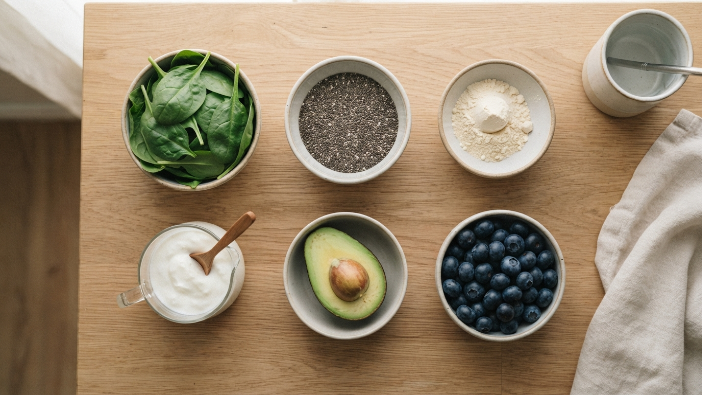
Okay, so here’s roughly how I think about what goes in the blender. There are five things I’m trying to hit, and honestly the order matters more than people assume.
Protein comes first, always. If the smoothie’s doing the job of an actual meal, I’m aiming for twenty to thirty grams. There was a meta analysis a while back that pooled a bunch of randomised trials and found protein reliably knocked hunger down and bumped fullness up, more than fat or carbs did on their own. Greek yogurt, cottage cheese, silken tofu, a scoop of plain protein powder, any of these will get you there. Also read how much protein women with PCOS actually need
Fibre goes in right after. Chia seeds, flaxseed, oats, a handful of spinach, whatever you’ve got, the point is slowing down how fast the carbohydrate hits your bloodstream. This isn’t just something I’ve noticed anecdotally either, it’s more or less what NHS guidance on PCOS diets tells you to do with any carb source.
Then you want some healthy fat in there. A spoon of nut butter, a few slices of avocado, or just the fat that’s already sitting in full fat yogurt. This slows digestion down further and helps your body actually absorb the fat soluble vitamins from everything else you’ve thrown in.
Go for low sugar fruit over high sugar fruit. Berries win out here, less sugar, more fibre than something like mango or pineapple, which is basically why they show up in nearly every PCOS friendly recipe you’ll come across.
And then the extras, the stuff that’s more about micronutrients than macros. Spinach, a spoon of cocoa, cinnamon, a bit of fresh ginger, these bump up antioxidants and flavour without really touching the sugar content.
The bit I think people miss is the order you actually build the thing in. Protein and fibre go in first, fruit is there for flavour, not as the base of the whole drink.
Get that right and the smoothie behaves completely differently once it’s in your system, even if the ingredient list looks basically the same as any other smoothie.
PCOS Superfood Smoothie Recipes to Build Around
Three recipes below, each one leaning into a different piece of that framework. Feel free to swap things around as you go, understanding why it works matters a lot more than following the recipe to the letter.
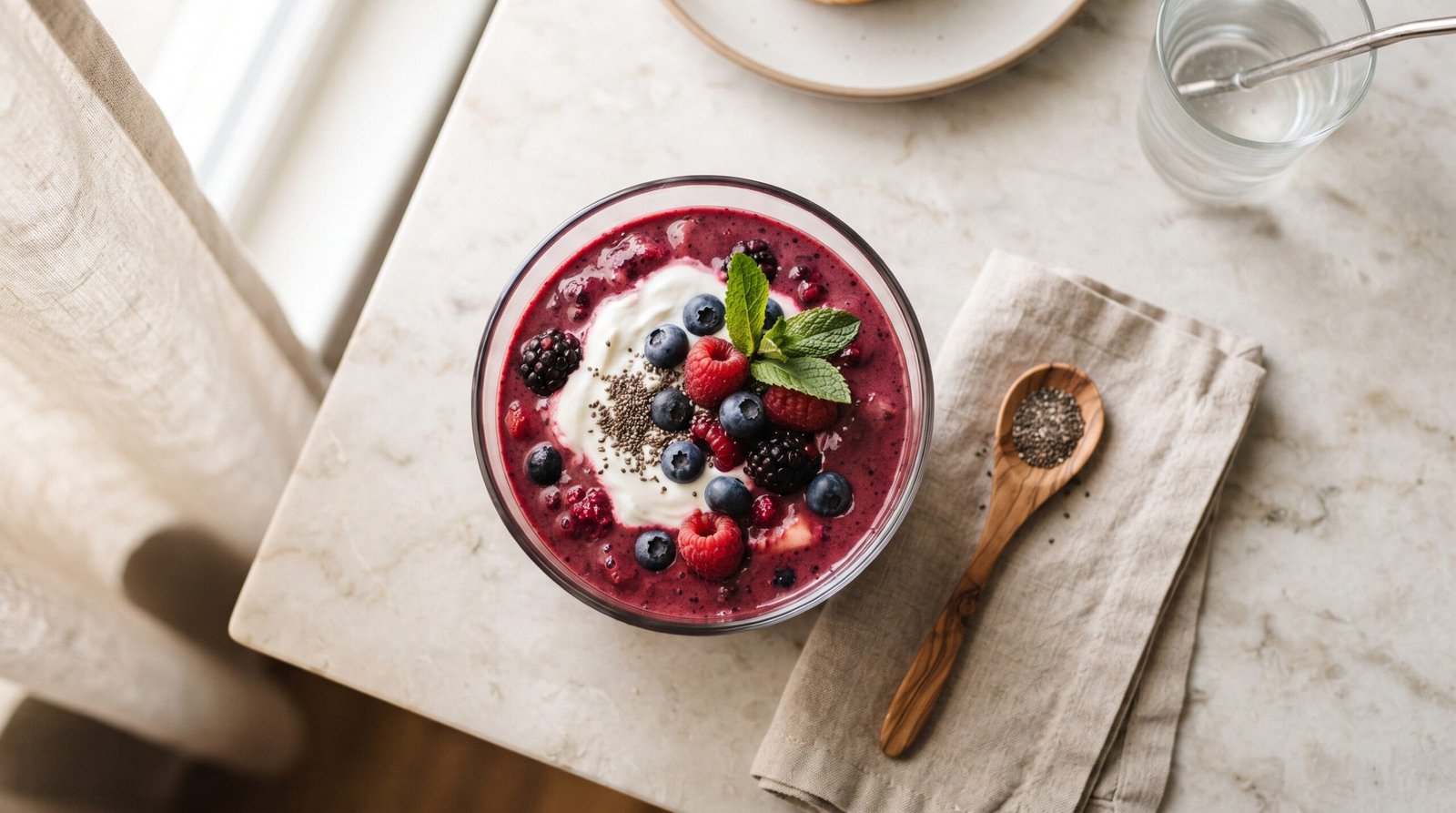
High Protein Berry and Chia Smoothie
This is the one I actually make most mornings, if I’m honest. It’s protein and fibre heavy right from the start, so you’re not gritting your teeth through hunger by eleven, and it takes about ninety seconds to throw together on a day when you’re already running behind.
What you’ll need: a cup of mixed frozen berries, a cup of unsweetened almond or oat milk, one scoop of plain protein powder (or half a cup of Greek yogurt, whatever’s actually in your fridge), a tablespoon of chia seeds, a small handful of ice.
How to make it: blend everything together until it’s smooth. If you’ve got a spare two minutes, let it sit before you drink it, the chia seeds soak up some liquid and thicken things up, so it ends up feeling more like a proper meal than just a drink.
Roughly: you’re in the ballpark of 25 to 30 grams of protein and 6 to 8 grams of fibre per glass, though I’ll be straight with you, this really does shift depending on the protein powder and milk you use. Brands vary way more than people expect, so it’s worth checking your own labels if you care about getting close to those numbers.
Swapping things out? Silken tofu works fine if dairy’s not your thing. If someone in the house has a nut allergy, oat or hemp milk does the same job as almond, no real difference.
Green Omega 3 Smoothie
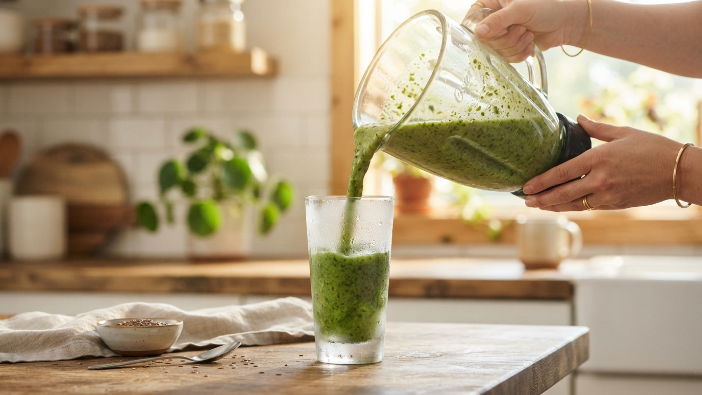
I know the colour puts people off before they’ve even tried it, and that’s a shame, because it doesn’t taste anywhere near as “green” as it looks. What you’re actually getting here is a solid dose of plant based omega 3s and folate, mostly down to the flaxseed and spinach doing the heavy lifting.
What you’ll need: a cup of baby spinach, half a frozen banana, a tablespoon of ground flaxseed, half an avocado, a cup of unsweetened milk, a squeeze of lemon.
How to make it: blend the spinach and milk together on their own first, until it’s fully smooth with no leafy bits still floating around. Then add everything else and blend again. Skip this step and you’ll end up picking spinach out of your teeth for the rest of the morning.
On the nutrition side, you’re looking at around 8 to 10 grams of fibre, plus a decent amount of alpha linolenic acid, which is just the plant version of omega 3, coming from the flaxseed and avocado together.
A couple of swaps worth knowing about: if you want to keep the sugar lower, just leave the banana out and add a bit more avocado instead for creaminess. And if you’re on any kind of blood thinner, it’s genuinely worth checking with your doctor before making flaxseed a daily thing, since it can build up.
Keto Friendly Chocolate Smoothie
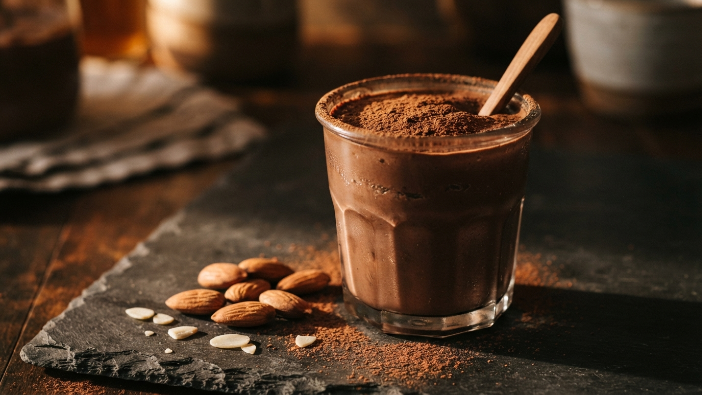
Sweet cravings are common with PCOS, there’s no getting around that, so instead of ignoring them, this one’s built to actually deal with it head on. Cocoa brings its own antioxidants to the table too, and you get all of that without the net carbs creeping up on you.
What you’ll need: a cup of unsweetened almond milk, half a cup of full fat Greek yogurt, one scoop of plain or chocolate protein powder, a tablespoon of unsweetened cocoa powder, a small handful of ice, a few drops of liquid stevia if you want it a bit sweeter.
How to make it: blend until it’s thick and fully smooth. If your blender’s labouring or it comes out too dense to actually drink, just add a splash more milk.
Numbers wise, this one usually comes in under 8 grams net carbohydrate, give or take depending on the brands you’re using, with somewhere around 20 to 26 grams of protein, more than enough to keep you going for a while.
Not doing dairy? Coconut yogurt swaps in easily for the Greek yogurt. Just know it’ll bump up the saturated fat a bit, worth keeping in mind if that’s something you watch.
Choosing the Right Smoothie
| Smoothie | Best for | Main protein source | Fibre source | Approximate carb level | Key nutrition focus | Easy substitution |
| High protein berry and chia | Busy mornings, general PCOS support | Protein powder or Greek yogurt | Chia seeds, berries | Moderate | Protein and fibre pairing | Silken tofu for dairy free |
| Green omega 3 | Fibre and omega 3 focus | Yogurt or milk | Spinach, flaxseed | Moderate | Plant omega 3, folate | Drop banana for lower sugar |
| Keto friendly chocolate | Lower carbohydrate eating, sweet cravings | Greek yogurt, protein powder | Cocoa fibre | Low | Blood sugar stability, satiety | Coconut yogurt for dairy free |
Why a Smoothie Can Quietly Turn Into a Sugar Bomb
Here’s the thing nobody warns you about: a smoothie can look completely innocent and still be hiding way more sugar than you’d guess just by glancing at it. Fruit juice is usually the worst offender.
You get all the sugar from the fruit but none of the fibre that would normally put the brakes on it, so honestly, just swapping juice for milk or plain water is one of the easiest upgrades you can make to any recipe.
Flavoured yogurt sneaks up on people too. A “vanilla” or “honey” tub sitting in your fridge might carry as much added sugar as an actual dessert, even though it’s marketed like a health food.
And I get the appeal of honey and dates, they’re natural, they feel wholesome, but a generous spoonful of either adds up faster than most people realise. It’s easy to pour in more than you meant to.
Protein powder isn’t automatically off the hook either. Some flavoured versions are loaded with added sugar, so it’s genuinely worth flipping the tub over and reading the label rather than assuming “protein” on the front means it’s fine.
And then there’s portion size, which people underestimate constantly. Blend a full litre jug and drink the whole thing in one go, and you’ve quietly doubled the sugar and calories of whatever recipe you were following.
None of this is a reason to fear fruit, to be clear. Whole berries, eaten alongside some protein and a bit of fat, behave completely differently in your body than the same amount of sugar coming from juice. It really is about the pairing, not about banning fruit from your kitchen altogether.
A Real Life Example: Rebuilding a Morning Smoothie
Think about a woman getting ready for work, PCOS diagnosed a couple of years back, who used to pick up a fruit smoothie from a shop on her commute because it genuinely felt like the healthier choice.
Most mornings, by ten o’clock, she’d find herself standing in front of the vending machine, wondering why “eating healthy” wasn’t actually working the way it was supposed to. Worth saying clearly, this is a hypothetical, not a real patient, but I’d bet plenty of readers see themselves somewhere in it.
The answer here was never cutting the smoothie out altogether. It was rebuilding what actually went into it. Swap out a shop bought version, the kind loaded with mango, pineapple and juice, for something closer to the high protein berry and chia recipe above, and the way hunger shows up later in the day tends to shift noticeably.
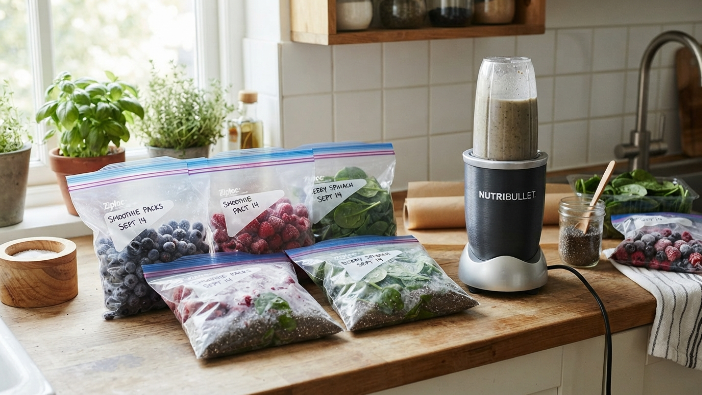
Having frozen berries, protein powder and chia seeds already sitting in the kitchen matters more than it sounds, because it takes the decision out of your hands at exactly the moment you’re least equipped to make a good one. That small bit of groundwork tends to do more than willpower ever manages on its own.
Adapting for Keto and Lower Carb Eating
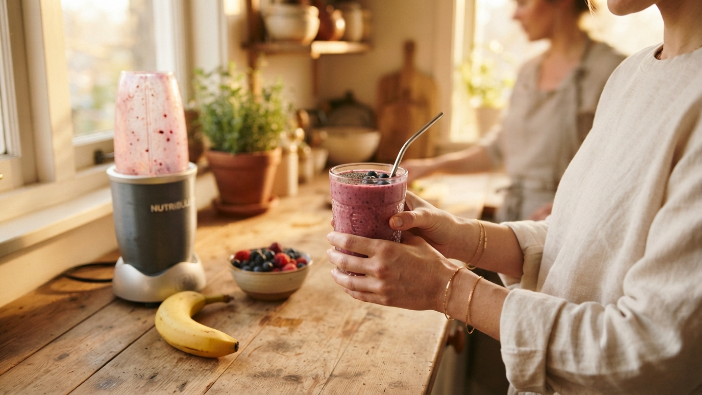
Not everyone with PCOS needs keto, and carbohydrate tolerance genuinely varies from person to person. Some women do very well on a moderate low carbohydrate approach without needing strict ketosis.
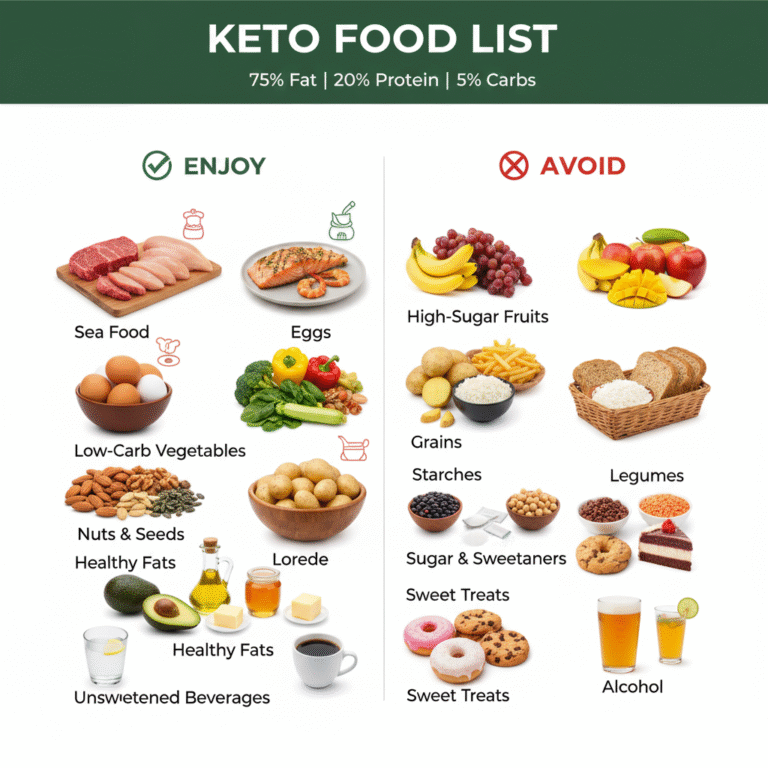
For readers following keto specifically, the main adjustments are dropping banana and other higher sugar fruit entirely, leaning on berries in small amounts if fruit is included at all, and choosing full fat dairy or coconut based alternatives rather than lower fat versions, which often carry more added sugar to compensate for flavour.
If you’re new to combining keto with PCOS nutrition more broadly, our guide on insulin resistant PCOS versus lean PCOS is a useful next read before deciding how strict to go.
Expert Tips for Better PCOS Smoothies
Get yourself a set of measuring spoons and actually use them for your protein powder and nut butter, at least for the first few weeks. I say this because an eyeballed “spoonful” is almost always closer to two, and once you’re doing that every single morning, it quietly adds up over a week without you noticing.
If money’s tight, frozen berries are the better buy over fresh, and not just as a budget move either. They’re usually cheaper, they last for months instead of days, and because they’re frozen right at peak ripeness, you’re not actually losing anything nutritionally by skipping the fresh punnet.
Give your chia seeds a few minutes to soak before you blend them in. It sounds like a small thing, but it makes a real difference, you end up with a thicker, more satisfying texture instead of that slightly gritty result you get from just tossing them in dry.
Sunday is a good day to get ahead of the week. Portion out frozen fruit, spinach and chia into freezer bags while you’ve got a spare twenty minutes, and suddenly a weekday morning smoothie is a two minute job rather than something you have to think about at all.
And if this smoothie is standing in for an actual meal rather than just a snack between meals, don’t skip on the protein. Twenty to thirty grams isn’t a nice to have here, it’s really the one detail that decides whether you’re still satisfied three hours later or hunting for food again in thirty minutes.
Conclusion
Here’s what I want to leave you with. A good PCOS smoothie was never really about tracking down some magical superfood to toss in the blender.
It’s about everything sitting around it, protein that actually keeps you full, fibre that takes the edge off the sugar, and fruit used thoughtfully rather than as the whole point of the drink.
Once that clicks, putting together or tweaking a recipe stops feeling like guesswork. You don’t need a cupboard full of expensive, hard to find ingredients, just a decent sense of what each thing in the glass is actually doing for you.
That’s really the whole answer behind PCOS superfood smoothie recipes that still hold you up past nine in the morning.
Frequently Asked Questions
Are smoothies good for PCOS?
They can be, genuinely, as long as they’re built around protein, fibre and a bit of healthy fat rather than just fruit and juice. A smoothie that’s mostly fruit can send your blood sugar up in a way that works against you, but a properly balanced one can actually support steadier energy and keep you fuller for longer.
What is the best smoothie for PCOS?
Honestly, there isn’t one single “best” smoothie, since everyone’s needs are a bit different. But the pattern that keeps showing up across good PCOS smoothie recipes is pretty consistent: a protein source, something fibrous like chia or flaxseed, a modest amount of low sugar fruit, and a healthy fat thrown in.
What should I put in a PCOS smoothie?
Start with protein, Greek yogurt or a protein powder both work well, then add some fibre, chia seeds or a handful of spinach do the job nicely. Toss in a small amount of berries for flavour and their antioxidants, and finish it off with a bit of healthy fat, nut butter or avocado are both good choices.
Can smoothies help with insulin resistance?
The research suggests that pairing carbohydrate with protein and fibre, which is exactly what a well built smoothie does, can help take the edge off your blood sugar response compared with eating carbohydrate on its own. That said, no smoothie is going to reverse insulin resistance by itself. It’s more that this kind of combination fits well into a broader way of eating.
Are bananas okay in smoothies for PCOS?
Generally, yes, in reasonable amounts, especially when there’s protein and fat alongside it to slow things down. If blood sugar stability is something you’re specifically watching, using half a banana instead of a whole one, or leaning on berries instead, is a pretty sensible middle ground.
Can I have a PCOS smoothie on keto?
You can, it just needs a few tweaks. Cut back on the higher sugar fruit, go for full fat dairy or an unsweetened plant milk, and keep any berries to a smaller portion. Done that way, your smoothie stays within a lower carbohydrate range while still giving you protein and fibre.
How can I make a PCOS smoothie more filling?
Protein should come first, twenty grams or more is a good target, then bring in a fibre source like chia seeds or oats, plus a small amount of fat. There’s also research on food texture suggesting that a thicker smoothie tends to feel more satisfying than a thin, watery one, so consistency matters more than people think.