Medical Disclaimer: I’ve put this together for general educational purposes, drawing on publicly available research and guidance from recognised medical and dietetic sources. It isn’t a stand in for individual medical advice, so if what you’re feeling is severe, sticking around for weeks, or showing up alongside pain, bleeding, or weight loss you didn’t ask for, please go and see your GP or a registered dietitian.
You cut the bread. You swapped the pasta for cauliflower rice. You’ve been measuring fat in tablespoons like it’s a science experiment. So why, by mid afternoon, does your stomach look and feel like you’ve swallowed a football?
It’s one of the more confusing parts of doing keto properly, because bloating on keto diet causes seem to contradict the whole point of the exercise. You’re eating “clean.” You’ve dropped the sugar. And yet your waistband is telling a completely different story.
Here’s the thing though, it’s rarely about willpower, and it’s almost never a sign you’re “doing keto wrong.” Most of the time there’s a specific, identifiable reason your gut is reacting the way it is, and once you know what that reason actually is, it tends to be manageable rather than mysterious.
Why Am I Bloated on Keto? The Short Answer
If I had to give you a quick answer, it would be this: bloating on keto diet causes usually trace back to a handful of repeat offenders. A fast increase in low carbohydrate vegetables and fibre. Sugar alcohols hiding in keto sweets and drinks.
A jump in fat intake that your gut hasn’t caught up with yet. Dehydration, or a shift in electrolytes. Constipation that crept in during the transition. Or, for some people, an individual sensitivity to dairy or another keto staple that has nothing to do with carbs at all.
None of these are dangerous on their own, but they’re uncomfortable enough that they can make you question the whole diet by week two.
Below, I’ve broken each of these down properly, including which ones tend to sort themselves out and which ones are worth paying closer attention to.
Bloating on Keto Diet Causes at a Glance
Since bloating on keto diet causes vary so much from person to person, it helps to see them side by side before reading the fuller explanation below. Also read Ultimate Keto Diet Guide for Beginners: 5 Easy Steps To Follow
The table separates common, near universal adjustment triggers from more individual sensitivities and issues that may need a closer look.
| Cause | Why It May Cause Bloating | What It May Look Like | What You Can Try | When to Pay Attention |
| Fibre and vegetable increase | A sudden rise in cruciferous and leafy vegetables gives gut bacteria far more to ferment than usual, producing gas as a normal byproduct | A tight, gassy feeling that builds over the day, often worse after large salads or vegetable heavy dinners | Increase vegetable portions gradually over one to two weeks rather than all at once, and try cooking or steaming rather than eating everything raw | If it has not eased after three to four weeks of gradual increases, consider whether a specific vegetable is the trigger |
| High FODMAP keto vegetables | Foods such as cauliflower, mushrooms, garlic, onion, and asparagus are keto friendly but contain fermentable carbohydrates, including a sugar alcohol called mannitol found in cauliflower, that can worsen bloating in sensitive individuals | Bloating that appears specifically after cauliflower rice, garlic heavy sauces, or mushroom dishes rather than after every meal | Trial lower FODMAP swaps such as courgette or spinach in place of cauliflower for a short period to see if symptoms change | Frequent, food specific bloating that keeps recurring with the same ingredients is worth discussing with a dietitian |
| Sugar alcohols and keto sweeteners | Sweeteners such as xylitol, sorbitol, and maltitol are not fully absorbed in the small intestine and are fermented by bacteria in the colon | Bloating, gas, and sometimes loose stools within a few hours of keto sweets, protein bars, or flavoured drinks | Cut back on daily sugar alcohol intake, or trial one sweetener at a time to identify which, if any, is the trigger | Ongoing symptoms despite cutting back may point to a broader sensitivity worth reviewing with a professional |
| Fast rise in fat intake | Shifting quickly to a very high fat diet can outpace the bile and digestive enzymes needed to break it down efficiently | A heavy, full feeling and bloating that appears within an hour or two of large, fat rich meals such as cheese boards or cream sauces | Increase fat gradually over one to two weeks and spread it across meals rather than concentrating it in one sitting | Persistent nausea or pain alongside fat related bloating should be assessed medically |
| Dairy or lactose sensitivity | Keto diets often significantly increase cheese, cream, and butter intake, which can be a problem for people who do not produce enough lactase | Bloating, gas, or discomfort that reliably follows dairy heavy meals specifically | Trial a short period with reduced dairy to see whether symptoms improve | Symptoms that continue despite reducing dairy suggest another cause is also at play |
| Constipation | Lower overall fibre compared with a grain based diet, reduced fluid intake, and shifting sodium levels can slow stool movement, giving gas more time to build up | A distended, hard feeling in the abdomen alongside infrequent or difficult bowel movements | Increase water, fibre, and electrolytes together, since each alone is often not enough | Constipation lasting more than two to three weeks despite these changes warrants medical advice |
| Hidden ingredients in packaged keto foods | Keto bars, breads, and shakes often stack isolated fibres, sugar alcohols, and dairy proteins together, which can add up even if each ingredient seems minor on its own | Bloating that builds gradually over days of regular packaged snack use rather than appearing after one product | Read ingredient labels and reduce reliance on packaged keto snacks in favour of whole foods | If symptoms improve once packaged snacks are removed, this is a strong sign they were the main driver |
The Vegetable Surge Nobody Warns You About
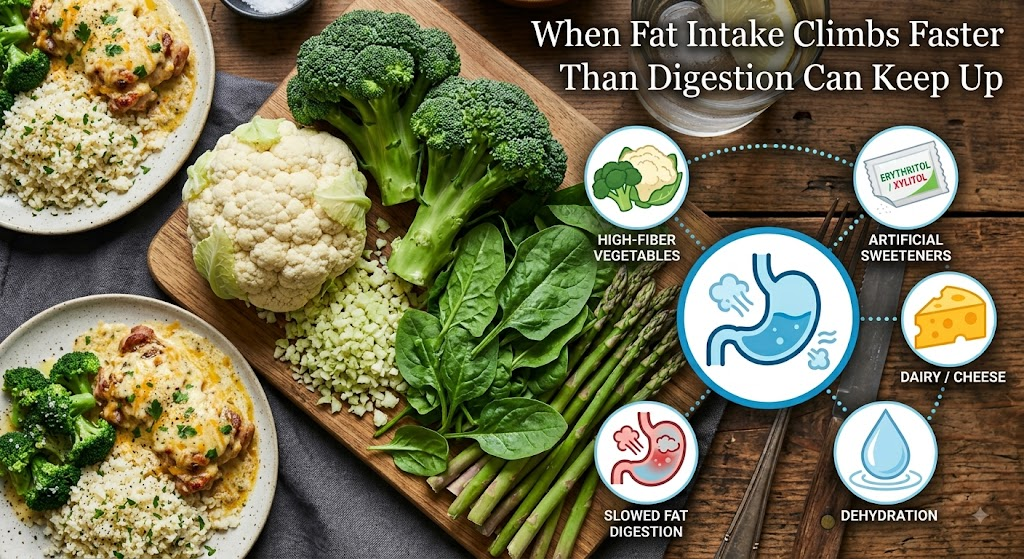
Okay so here’s what actually happens. You cut the carb heavy stuff, and your plate needs filling with something, so in comes the broccoli, the cauliflower, the cabbage, spinach, kale, the works.
Good foods, genuinely. Fibre, nutrients, all the right boxes ticked. Except a fair few of them also contain compounds your gut bacteria are more than happy to turn into gas.
I went looking into the NIDDK’s own research on this, and it basically comes down to bacteria in the large intestine producing gas as a byproduct of breaking down carbohydrates, fibre included, that your stomach and small intestine can’t fully handle on their own.
Which sounds technical until you picture it in real terms. Someone who used to have an occasional side salad now eating two or three cups of cruciferous veg a day?
Their gut hasn’t caught up yet. It’s not malfunctioning. It’s just running a bit behind. Honestly, this is probably the number one reason people bloat in week one or two of keto, and the good news is it’s also the most short lived.
A beginner who triples their broccoli and cauliflower rice intake almost overnight is about as textbook as it gets, and for most of them, things settle within a week or two once the gut catches up.
Sugar Alcohols and Keto Sweeteners
Keto baking, those “sugar free” treats stacked in the cupboard, the flavoured electrolyte sachets, half of it relies on sugar alcohols, erythritol, xylitol, sorbitol, maltitol, to get sweetness in without the carbs.
Mayo Clinic’s guidance is pretty clear on this one. These sweeteners aren’t fully absorbed in the small intestine, so whatever’s left over heads down to the colon, gets fermented by bacteria, and out comes gas.
Not all sugar alcohols behave the same, though, which is a detail people often miss. Cleveland Clinic has flagged research showing xylitol tends to cause more bloating, gas, and stomach upset than erythritol, which is usually gentler unless you’re having quite a bit of it.
So if there’s a bag of keto sweets, a stash of protein bars, or a daily “zero sugar” drink involved, sugar alcohols are a genuinely reasonable suspect. Pull back for a week and you’ll usually know either way.
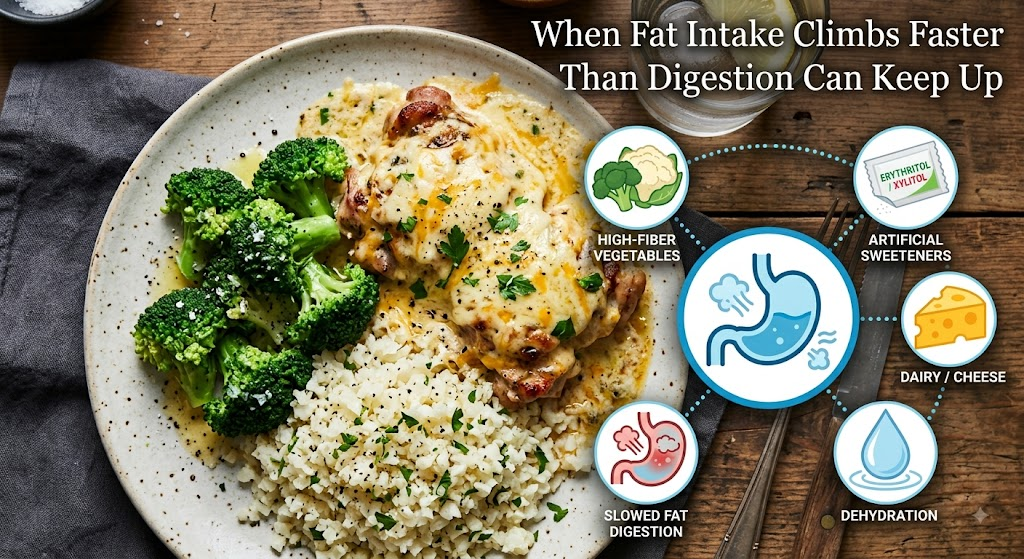
When Fat Intake Climbs Faster Than Digestion Can Keep Up
Keto’s a high fat diet, that’s the whole point of it, but jumping from moderate fat to seventy percent plus of your calories coming from fat is a lot for your digestive system to handle overnight.
It needs enough bile and pancreatic enzymes to actually process that much fat, and when intake shoots up fast, some people end up with delayed stomach emptying, that heavy, weighed down feeling, and bloating after meals built around cheese, cream, and oil.
Think of someone swapping their usual dinners for cheese, cream sauces, and buttered veg, all in the same week they start keto. Fat isn’t the villain here. Speed is. Ease into higher fat meals over a week or two rather than diving straight in, and digestion tends to cope a lot better.
Portion Size and Eating Pace
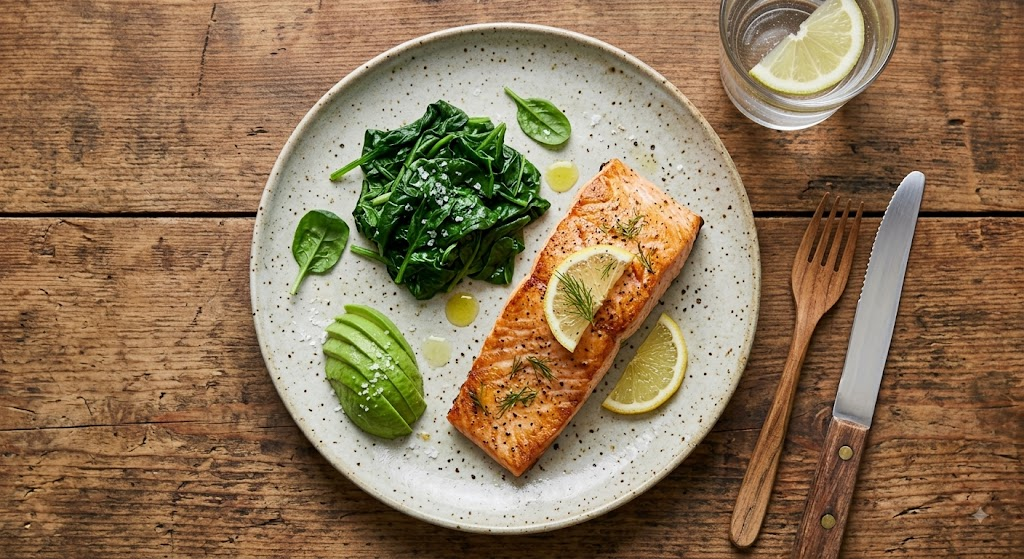
This one almost feels too obvious to say out loud, but bigger portions, even of foods that tick every keto box, stretch the stomach and can leave you feeling bloated no matter what’s actually on the plate.
And eating fast, chatting mid mouthful, drinking through a straw, all of that means swallowing more air than you’d think, which just piles onto the tight, gassy feeling. It’s more mechanical than dietary, if that makes sense, and slowing down at the table is about as easy a fix as you’ll find.
Dairy and Individual Food Sensitivities
Keto meal plans lean hard on cheese, cream, butter, full fat yoghurt, usually far more than most people were eating beforehand. If you’ve got lactose intolerance, or even just a mild dairy sensitivity, that jump can bring on bloating, gas, and general discomfort that has absolutely nothing to do with carbs.
NIDDK describes lactose intolerance as digestive symptoms, bloating and gas among them, that turn up after eating or drinking anything with lactose in it, because the small intestine isn’t making enough lactase to break it down.
So if your bloating tends to follow cheese boards, cream heavy sauces, or a big glass of full fat milk specifically, it’s worth pulling dairy out as its own thing to test, rather than assuming the whole diet’s to blame.
Constipation and Its Role in Bloating
Constipation and bloating, more often than not, turn up together. When stool moves through the colon slower than it should, gas gets more time to build up, and your stomach can feel distended even on a day where nothing unusual was eaten.
On keto, constipation usually comes down to a mix of things, less overall fibre than a grain heavy diet would give you, not drinking enough, and shifts in sodium and potassium as your body adjusts to running on less insulin.
We’ve covered the full mechanics of that properly in our dedicated guide to keto constipation, but it’s worth mentioning here too, because unresolved constipation is honestly one of the most overlooked reasons keto bloating sticks around longer than it should.
Hidden Ingredients in Keto Packaged Foods
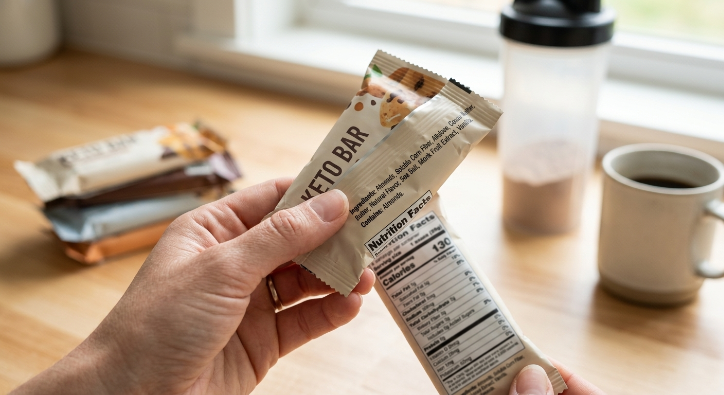
Keto branded bars, breads, crackers, and shakes are convenient, but many rely on a combination of isolated fibres such as inulin or chicory root, sugar alcohols, and dairy proteins to hit their carbohydrate targets.
Any one of these can be fine in small amounts, but stacked together in a daily “keto snack,” they can add up to a meaningful fermentable load.
Someone eating a keto packaged bar or shake every single day is a common, realistic scenario where bloating builds gradually rather than appearing all at once, which can make the cause harder to spot.
Carbonated Drinks and Other Everyday Contributors
Many people increase their intake of sparkling water or diet soda when giving up sugary drinks on keto. Carbonated beverages introduce extra gas directly into the digestive tract, according to Mayo Clinic, and this can compound bloating that is already being driven by fibre or sweetener changes elsewhere in the diet.
Real Life Examples of Bloating on Keto
When I looked across the research and professional commentary on this topic, two published explanations from qualified practitioners stood out as genuinely useful, rather than generic, so I want to walk through what each of them actually said and how it connects to keto related bloating.
These are their professional statements, not my own clinical opinion.
A registered dietitian on why keto specific foods can worsen bloating:
Katelyn Collins, RD, a registered dietitian who specialises in irritable bowel syndrome and digestive health, tackled this exact question in a column she wrote for Gastro Girl, a gastroenterology focused patient education platform.
What she found is that cauliflower, one of the most relied upon keto substitutes going, used for rice, mash, pizza bases, all of it, is high in a fermentable carbohydrate called mannitol.
She also flagged that several other keto friendly vegetables, Brussels sprouts, garlic, onions, leeks, asparagus, and certain mushrooms among them, are high in FODMAPs, the fermentable compounds well known for triggering gas and bloating in sensitive people.
On top of that, she pointed out that sugar alcohols hiding in prepackaged keto treats can be a bloating trigger nobody thinks to check.
What stood out to me, comparing this against everything else I read, is how specific it gets about why some technically “healthy” keto vegetables can still leave you bloated, which most general bloating content skips over entirely
A gastroenterologist on the broader role of diet in bloating
Kamal Amer, MD, a gastroenterologist at Gastroenterology Associates of New Jersey, was interviewed on the subject of bloating and its causes, and noted that diet plays a significant role in the symptom.
Amer explained that foods including dairy, wheat, oats, and certain fruits contain molecules that some people struggle to digest properly, which can lead to bloating, and identified FODMAPs as a common thread across many of these trigger foods.
Connected to keto specifically, this supports the pattern described earlier in this article around dairy, since cheese and cream intake typically rises sharply once someone starts eating keto, and Amer’s comments reinforce that identifying individual trigger foods, rather than assuming one universal cause, is the more useful approach
Gut Microbiota Adjustment: The Bigger Picture
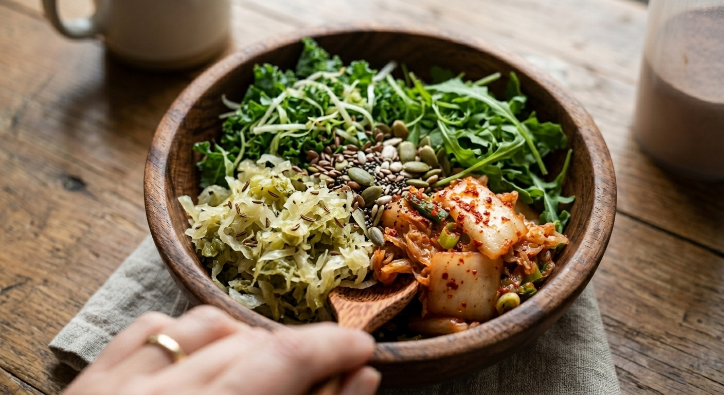
Underneath pretty much all of the individual triggers we’ve covered sits one bigger process, your gut microbiome recalibrating to a completely different fuel source and fibre profile.
Research into low carbohydrate diets shows that moving away from carbohydrate rich foods actually changes the balance of bacterial species living in your colon, and that adjustment period can bring temporary gas and bloating along with it as certain bacterial populations shift and settle.
That doesn’t mean anything has gone wrong. If anything, it’s closer to the digestive version of feeling sore after your first week back at the gym, uncomfortable, sure, but generally a sign your body is adapting rather than a sign of damage.
Hydration and Electrolytes
Here’s something a lot of people miss. Keto lowers your insulin levels, and insulin has a hand in how much sodium and water your kidneys hold onto.
As insulin drops, more sodium and fluid get released, which is a big part of why the scale moves so fast in week one of keto, most of that early “weight loss” is water.
The catch is, if your fluid and electrolyte intake doesn’t rise to match what you’re losing, digestion can slow right down, and constipation can follow, which brings bloating along with it.
Usually this comes down to drinking enough water and, where it makes sense, bringing in sodium, potassium, and magnesium too, ideally with a doctor or dietitian’s input if you’re on medication for blood pressure or kidney function.
What’s Common and What’s Actually Yours to Figure Out
Keto bloating really falls into three buckets, and it helps to know which one you’re dealing with. There’s the standard adjustment phase, which is what most beginners go through in the first couple of weeks as fiber, fat, and fluids all shift around at once.
Then there’s the personal trigger, something like dairy, a certain sugar alcohol, or one specific vegetable that sets you off but doesn’t bother anyone else. And then there’s the stuff that just won’t quit no matter what you change, which is when it’s time to stop guessing and actually see someone about it.
When It’s Not Just “Keto Doing Its Thing”
A bit of bloating after a big meal, especially a fiber heavy one, is totally normal, and Cleveland Clinic notes it usually clears up on its own or with a small tweak to what you’re eating.
That said, you shouldn’t just shrug it off if it keeps coming back week after week, or if it shows up alongside stomach pain that won’t ease, changes in your bathroom habits, blood in your stool, losing weight without trying, a fever, or feeling stuffed after only a few bites.
None of that is something keto causes on its own. It could point to IBS, SIBO, celiac disease, or occasionally something more serious that needs looking into right away.
Starting a new diet doesn’t make you immune to other conditions, so don’t let keto become the default excuse for every stomach issue that pops up.
So How Long Does This Actually Last?

If you’re in that first, ordinary adjustment phase, most people feel better within two to four weeks, once your gut bacteria, hydration, and eating patterns settle into a rhythm.
If you can pin the bloating on one specific thing, a sweetener or dairy, say, it usually calms down within a few days of cutting that one thing out. But if you’re a month in and nothing’s improved, or it’s actually gotten worse, that’s your cue to talk to a doctor instead of waiting it out any longer.
A Better Way to Track Down the Culprit
Instead of overhauling your whole diet at once, it works better to just jot down what you’re eating and when the bloating shows up, then pull one likely suspect at a time, starting with sugar alcohols, then dairy, then how much raw broccoli or cauliflower you’re eating.
Give each change about a week before you decide anything. This kind of slow, one at a time approach tends to find the real answer a lot faster than eliminating everything and hoping for the best, and it means you’re not cutting out good food that was never actually the problem.
Things That Actually Help
These aren’t magic fixes, everyone’s gut reacts a little differently, but they’re a solid place to start, and they line up with what dietitians and GI doctors tend to recommend.
Ease into more fiber and vegetables rather than going all in on day one. Your gut bacteria need time to catch up to a bigger fermentable load, so stretching the increase out over a week or two usually goes down a lot easier.
Look closely at which sweetener you’re actually using. Dietitian Katelyn Collins has pointed out in her writing for Gastro Girl that sugar alcohols hiding in packaged keto snacks are a real and common trigger, and testing them one at a time over a week is the most reliable way to narrow it down.
Watch your portions, not just what’s on the plate. Even a completely keto friendly meal can cause trouble if it’s a huge amount of fat all at once, so breaking that up across smaller meals through the day can make a real difference.
Figure out your own personal triggers instead of assuming every “typical” keto vegetable is going to bother you. Cauliflower and garlic, for instance, are higher in fermentable carbs than a lot of other keto staples, so trying a short stretch without one suspect food at a time usually tells you more than cutting everything at once.
Deal with constipation if it’s an issue, since it’s one of the most overlooked reasons people bloat in the first place. That usually means upping your water, fiber, and electrolytes together, because any one of those alone often isn’t enough to fix it.
Check if dairy’s the issue, especially if bloating tends to show up after cheese boards, cream based sauces, or a lot of full fat yogurt. It’s worth testing on its own before blaming your whole diet.
Read the labels on packaged keto products. Isolated fibers, sugar alcohols, and dairy proteins can stack up fast over a day of snacking, even when each individual product looks fine by itself.
Try not to cut out whole food groups over one bad day. Ditching everything because of a single bloating episode usually isn’t necessary and can leave gaps in your diet without ever solving the actual problem. A more targeted approach, one change at a time, tends to get you further.
Mistakes Worth Avoiding

Ramping up fiber too fast. Whether you’re adding vegetables quickly or cutting carb heavy fiber sources all at once, a sudden shift is one of the biggest reasons people bloat when they first start keto. Taking a week or two to ease into it tends to go a lot smoother.
Loading up on high fat food in one sitting. Keto is a high fat way of eating by design, but a single meal stacked with cheese, cream, and oil can overwhelm your system in the moment. Spreading that fat out over the day is usually more comfortable.
Eating a lot of “sugar free” keto sweets without checking what sweetener is actually in them. Xylitol and sorbitol tend to cause a lot more trouble than erythritol does, so treating them all as interchangeable makes it harder to figure out what’s actually bothering you.
Assuming bloating means something about ketosis, either that it’s working or that it’s failing. It’s just a digestive adjustment, not a signal about your metabolic state, and reading too much into it either way tends to lead you astray.
Ignoring constipation instead of dealing with it head on. It’s easy to focus only on food and forget about bowel habits, but constipation is a well known contributor to bloating and usually responds well to enough fluid, fiber, and electrolytes.
Leaning too hard on packaged keto products day after day. They’re convenient, sure, but keto bars, breads, and shakes often pack in several fermentable ingredients at once, and that can add up to more than any single ingredient would suggest on its own.
Cutting out entire food groups, all vegetables or all dairy, without ever pinning down which specific food is causing the problem. That just shrinks your nutrient intake and makes it harder to find the real cause, since a broad cut doesn’t tell you what actually fixed things.
Writing off symptoms that keep dragging on or getting worse as “just keto.” Bloating that sticks around past three or four weeks, or comes with pain, blood in your stool, or unexplained weight loss, needs a proper medical check, not another diet tweak.
Bottom Line
Once you break it down, bloating on keto usually isn’t much of a mystery. A jump in fiber and vegetables, sugar alcohols, a fast rise in fat, dairy, constipation, hidden ingredients in packaged snacks, or just your gut adjusting, one of those covers most cases, and they tend to fade within a few weeks.
If it’s sticking around or getting worse, that deserves a real medical look, not another round of “it’s probably just keto.”
Frequently Asked Questions
Why am I bloated on keto?
Could be a few things at once, honestly. More veg than you’re used to, sugar alcohol in your sweetener, way more fat, not enough water, gut bacteria still figuring out the new normal. Doesn’t usually mean anything’s wrong.
Is this normal when you’re just starting out?
Yeah. First few weeks your body’s dealing with a lot of change at once, fiber, fat, fluids, all together. Give it a couple weeks.
So what’s actually behind it?
Cruciferous veg is a common one. Sugar alcohols too, erythritol and xylitol get mentioned a lot. Fast increase in fat. Dairy, if you’re sensitive. Constipation, which people forget about. Even soda or scarfing food down too fast can do it.
Do the sweeteners really cause it?
Yes, more than people realize. Xylitol, sorbitol, maltitol, none of that gets absorbed well, so it ferments in your colon and you get gas. Erythritol’s usually easier on people but not immune.
Constipation makes it worse?
It’s underrated as a cause, honestly. Stuff backs up, gas builds, stomach feels tight. Water, fiber, electrolytes together, not just one of them.
Is dairy the issue for me?
Depends. If you’re lactose intolerant, or even a bit sensitive, then probably. Keto means a lot more cheese and cream than most people were eating before. Try cutting it for a week if you’re not sure.
How long before it goes away?
Two to four weeks for the general kind. Days, if you can point to one specific trigger and cut it. Longer than that with nothing changing, worth asking why.
When do I actually need a doctor?
Past three or four weeks and nothing’s improving. Getting worse instead of better. Pain that won’t ease off, blood in your stool, losing weight you didn’t mean to, fever, or feeling full after basically nothing. Any of that, go get it checked. Don’t just chalk it up to keto.