Medical disclaimer: I am not a doctor, dietitian or clinician, and nothing here should be treated as a diagnosis or a treatment plan. This article is based on a close reading of the published clinical research on spearmint tea and PCOS, alongside guidance from recognised medical bodies. If you are pregnant, breastfeeding, taking prescription medication, undergoing fertility treatment, or living with symptoms that feel severe or are getting worse, please speak with your GP or a specialist before changing anything about your diet or routine.
There is a strange gap between what gets said about spearmint tea in PCOS Facebook groups and what actually sits in the research behind it. Search “spearmint tea PCOS benefits explained” and you will find two very different articles competing for your attention.
One treats it as a near miracle for excess hair and acne. The other, usually written by someone with a medical background, mentions it almost dismissively, as a curiosity rather than a real option.
Neither version is quite honest. I spent a good chunk of time going through the actual trials, the ones researchers cite when they talk about spearmint’s antiandrogen effects, and a few things surprised me.
The evidence is real, it is just smaller and more specific than the internet version suggests. Understanding that gap matters more than another list of benefits, so that is what this article sets out to do.
Why This Herb Ended Up Being Studied At All
Nobody set out to make spearmint tea a PCOS trend. The whole thing traces back to a strange, almost throwaway observation in a small Turkish town on the Anamas plateau. Local clinicians there kept noticing something odd: men who drank tea brewed from Mentha spicata regularly seemed to report a drop in libido.
That’s it. That’s the origin story. Not a lab, not a pharmaceutical pipeline, just doctors in one region comparing notes and going, huh, that’s weird.
Enough people found it interesting that researchers at Suleyman Demirel University decided to actually test it, starting with rats and eventually moving to women with hirsutism, to see whether spearmint was doing something measurable to androgen hormones or whether it was just local folklore.
It’s worth knowing that backstory before you read anything else about spearmint tea and PCOS, honestly, because it explains a lot about the shape of the research that followed. Nobody designed these studies to test weight loss.
Nobody was looking at fertility outcomes or trying to build a general PCOS management protocol. The question was narrow, almost stubbornly so: does spearmint change androgen levels in the body, yes or no. Everything that gets claimed beyond that question is, strictly speaking, someone else’s extrapolation. Also read: How much protein Should Women with PCOS Eat Daily
What the Two Key Trials Actually Tested
Nearly every “spearmint tea lowers testosterone” claim floating around online traces back to just two small studies. Not twenty. Two. So it’s worth slowing down and actually looking at what each one did, rather than trusting whatever summary you scrolled past on Pinterest.
The first is the 2007 Turkish study. Twenty one women with hirsutism took part, twelve of whom also had PCOS, and they drank a cup of spearmint tea twice a day, morning and evening, for five days, timed to the follicular phase of their cycle. Just five days.
After that short window, free testosterone had dropped in a way that was statistically significant, and LH, FSH and oestradiol had all gone up. Total testosterone didn’t budge in any meaningful way, and neither did DHEA sulphate, which is another androgen marker researchers often check alongside testosterone.
The researchers themselves were careful here, which I appreciated when I read the original paper. They flagged the findings as preliminary and said flatly that there was nothing yet doctors could actually recommend to patients based on it.
Then there’s the 2010 UK trial, the one that shows up as the heavyweight citation almost everywhere. It ran across two centres and was published in Phytotherapy Research. Forty two women with PCOS were split into two groups, one drinking spearmint tea and the other a placebo herbal tea, twice daily, for a full thirty days this time.
By the end, both free and total testosterone had dropped significantly in the spearmint group, with LH and FSH climbing again. Where it gets more interesting is how they measured hirsutism, because they used two different methods side by side: the Ferriman Gallwey score, which is a clinician physically rating hair growth, and a separate quality of life questionnaire asking women how they felt their own hirsutism had changed.
Here is the part that tends to get left out of the online summaries. Hormone levels changed. The self reported hirsutism scores improved. But the objective Ferriman Gallwey ratings, the ones an outside observer would use to measure actual hair growth, did not show a statistically significant difference between the spearmint group and the placebo group over those 30 days.
The researchers were upfront about why. Hormone levels can shift within days or weeks, but visible hair growth follows a much slower biological clock tied to hair follicle cycles, so a genuine reduction in androgens might simply need far longer than a month to show up as less visible hair.
That is a reasonable explanation, and it is also, as of the most recent published research on this specific trial, still a proposal rather than a confirmed outcome. Nobody has yet run the longer study that would settle it.
What This Means When You Strip Away the Marketing Language

So where does that leave “spearmint tea PCOS benefits explained” as a claim?
Here’s the honest version. Two small, short trials found that spearmint tea, drunk twice a day, can lower testosterone and bump up LH and FSH in women with PCOS or hirsutism.
That’s a real, measurable effect, and honestly, it’s a little unusual for a plant based tea to show up that consistently across two separate studies run more than a decade apart in two different countries. I’ll give it that much credit.
What hasn’t been shown is that spearmint tea visibly reduces facial or body hair, clears up acne, gets ovulation back on track, or improves fertility. And those are exactly the claims that get repeated the most online.
Read the actual papers next to the wellness blogs covering them and the gap is almost funny. Something like “a plausible benefit worth further study,” which is about as far as the researchers themselves were willing to go, somehow turns into “spearmint tea clears PCOS acne” three or four blog posts down the line.
One more thing worth knowing, while we’re on the subject of things changing faster than people realise: PCOS got renamed. In May 2026, a global consensus process published in The Lancet, backed by more than fifty patient and professional organisations including the Endocrine Society, officially renamed the condition polyendocrine metabolic ovarian syndrome, or PMOS.
The reasoning is that it’s a hormonal and metabolic condition, not really a disease about ovarian cysts, so the old name was kind of misleading from the start. This doesn’t change anything about what spearmint tea does or doesn’t do.
But it’s a decent reminder that the research and even the vocabulary around this condition keep moving, and whatever you learned about PCOS a few years ago might already be a bit behind. I’ve stuck with “PCOS” throughout this piece since that’s still what most people are typing into Google, and it’s the term the rest of this site uses too, but it felt worth flagging.
Acne, Insulin and Weight: Where the Evidence Gets Thinner
A lot of PCOS content just lumps spearmint tea in with acne, insulin resistance and weight loss as if it’s one tidy package deal. It isn’t. Worth pulling these apart properly.
Acne first. Since PCOS acne is often driven by too much androgen floating around, it makes sense, on paper, that lowering testosterone might help clear skin too. That’s a reasonable guess.
But a reasonable guess is not a finding, and I went looking and could not find a single trial that actually measured acne as an outcome after spearmint tea use in women with PCOS. So if someone tells you it clears PCOS breakouts, they’re connecting dots the researchers never connected themselves.
Insulin resistance and weight come next, and this is where things get a bit murkier. There’s a 2021 systematic review that looked at tea more broadly in women with PCOS, not just spearmint, covering green tea and a few other varieties too, and it did find that tea in general was linked to lower fasting blood sugar, lower fasting insulin, and lower body weight in some groups, plus some improvement in a couple of reproductive hormone markers.
Green tea was doing most of the heavy lifting in that data, though, not spearmint. So lumping “helps with insulin resistance and weight loss” into the spearmint tea conversation specifically is stretching what the evidence actually says.
And fertility, or cycle regularity. Both spearmint trials showed LH and FSH going up, which is interesting because those hormones are involved in ovulation, sure. But neither study tracked whether women actually ovulated, whether their cycles became more regular, or whether anyone got pregnant.
None of that was measured. So there’s no real evidence spearmint tea does anything for fertility in PCOS, and if that’s genuinely your concern, that’s a GP or fertility specialist conversation, not a tea one.
How the Studies Actually Prepared It, and How People Use It in Real Life

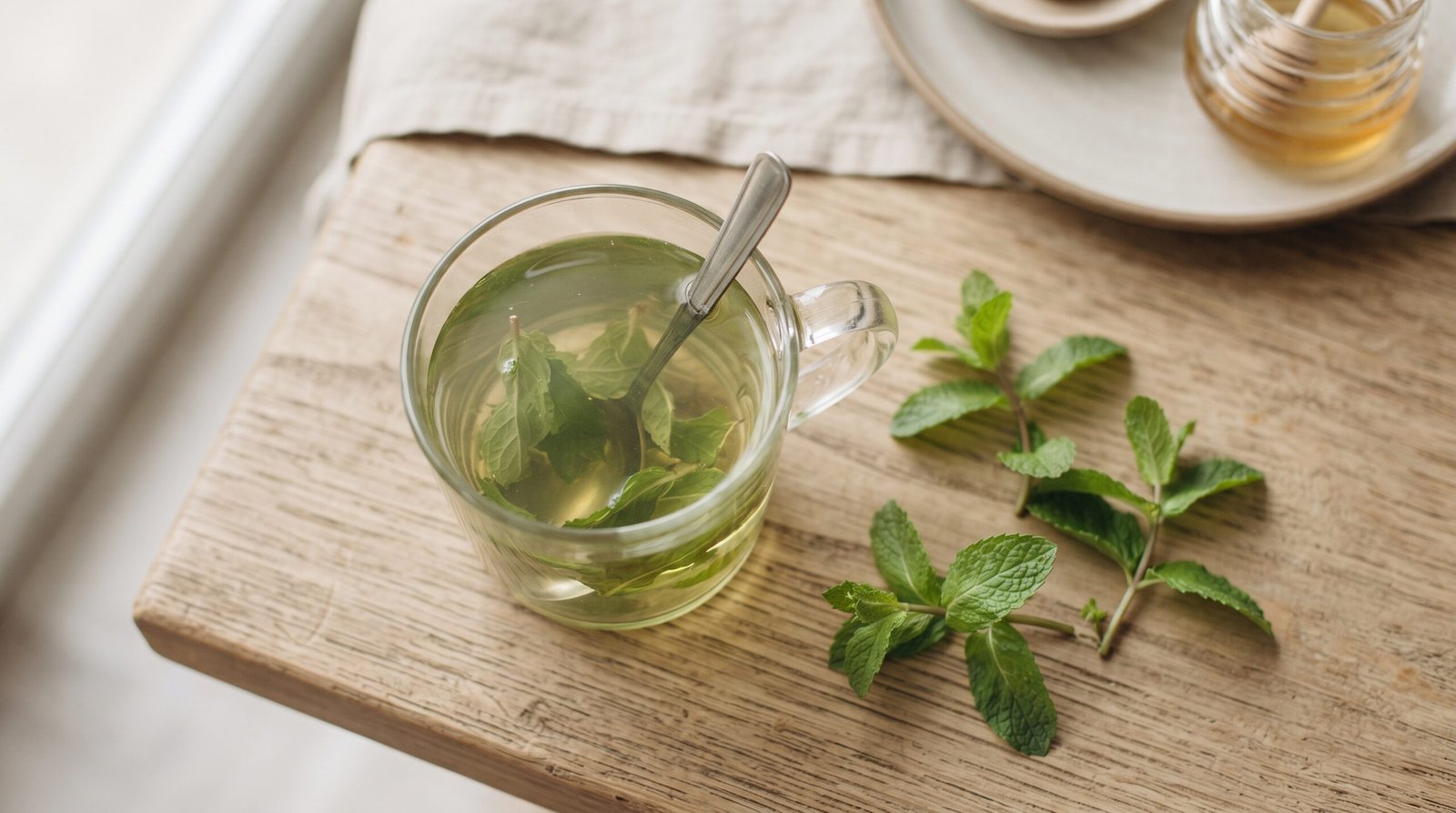
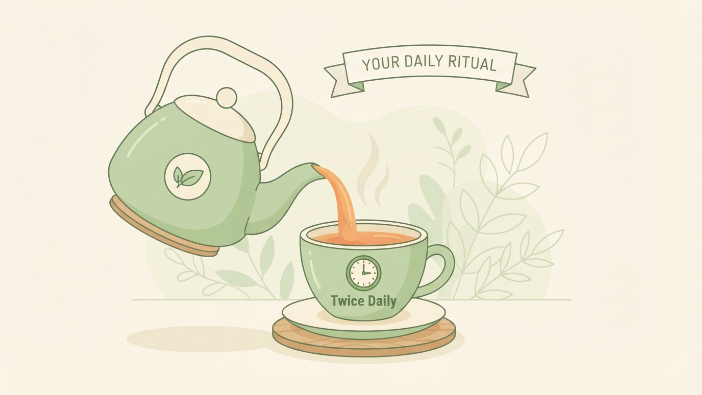
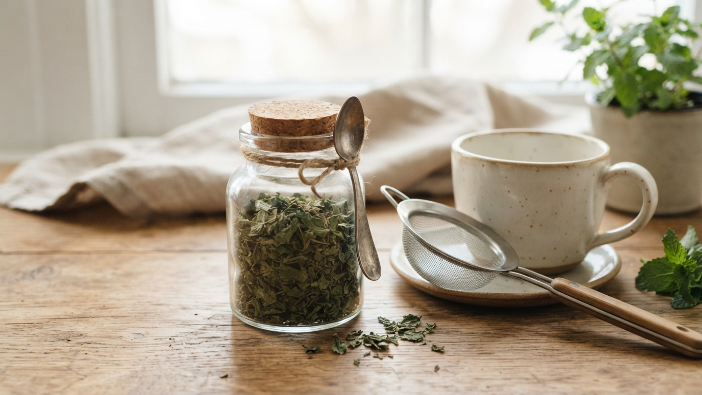
In both trials, the tea itself was nothing fancy: dried Mentha spicata leaves steeped in hot water, one cup twice a day, morning and evening, for anywhere from five days up to a month. That’s it. Which is a lot more modest than the “drink it all day, every day” advice that tends to circulate online.
Translated into an actual cup, that roughly means a teaspoon of dried leaves, or a small tea bag, steeped for five to ten minutes. That’s not a prescribed dose, to be clear. Nobody has run a trial comparing weaker versus stronger brews to find some optimal amount. It’s simply what participants drank when researchers observed these hormone changes, so it’s the closest thing we have to a reference point.
If you’re wondering how long to give it before deciding whether it’s doing anything, here’s the honest timeline. The Turkish study picked up hormone changes in just five days. The UK trial saw hormone shifts and improved self reported hirsutism symptoms over thirty days, though nothing an outside observer could confirm yet.
So a month is really the minimum before you’d notice anything worth noticing, and if visible changes to hair growth ever show up, they’d likely take a lot longer than that, simply because hair follicles work on their own slow timeline regardless of what’s happening with your hormones.
Safety Considerations Worth Taking Seriously
Spearmint tea is, generally speaking, well tolerated, and people have been drinking it as an ordinary culinary herb for a very long time, which is part of its appeal compared to prescription antiandrogens. Still, a couple of things are worth flagging honestly.
Because it does have a measurable effect on hormones, it’s not something to just casually stack on top of hormonal medication, fertility treatment, or antiandrogen prescriptions like spironolactone, without running it past whoever prescribed those first. Pregnant or breastfeeding?
Talk to your midwife or GP before making it a daily habit, since it hasn’t really been studied in that context. And if you already deal with acid reflux or a sensitive stomach, mint teas in general can sometimes stir that up, so it’s worth paying attention to how your body actually reacts rather than assuming it’ll be fine. Genuine mint allergies exist too, though they’re not common.
None of this is a substitute for whatever your doctor has already prescribed you. If your PCOS symptoms are genuinely significant, hirsutism that’s affecting your confidence, cystic acne, periods that have gone missing for months, spearmint tea is, at best, a small addition alongside proper care. Not instead of it.
Where This Realistically Fits
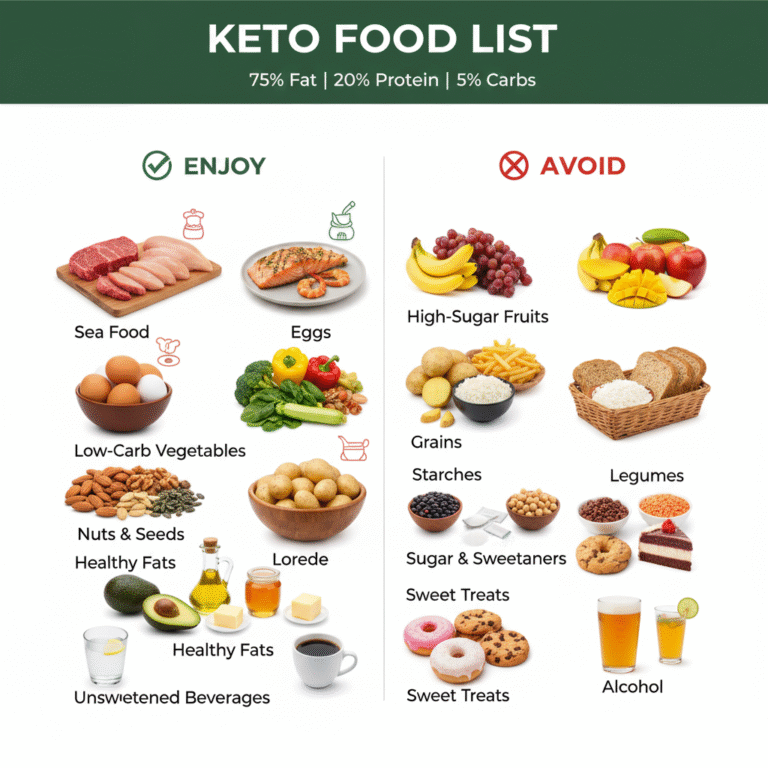
If you already follow a PCOS friendly way of eating, such as the lower carbohydrate approaches covered elsewhere on this site, spearmint tea is a low risk, low cost addition that has genuine, if modest, research behind its hormonal effects.
It is reasonable to try it for a month or two while paying attention to how you feel, alongside the parts of PCOS management with much stronger evidence behind them, like addressing insulin resistance through diet, as explored in our guide on keto for insulin resistant PCOS versus lean PCOS, or understanding how androgens and carbohydrate intake connect to breakouts in our piece on the PCOS acne and keto connection.
What I would not do is treat spearmint tea as a stand in for medical care, or expect it to visibly change hirsutism, clear acne, or regulate a missing period on its own. The research simply does not support that level of confidence yet, and being honest about that is more useful to you than another exaggerated headline.
Frequently Asked Questions
Does spearmint tea actually help PCOS?
There is genuine randomised trial evidence that spearmint tea, drunk twice a day, can lower testosterone and raise LH and FSH in women with PCOS. Whether that translates into visible symptom relief such as less hair growth or clearer skin is still not established by an objective measurement, which is the honest answer behind “spearmint tea PCOS benefits explained.”
Can spearmint tea lower testosterone?
Two small trials found reductions in free testosterone, and one of them also found a reduction in total testosterone, after regular use over five to thirty days. The effect appears real, though the studies were small and short.
Does spearmint tea help with PCOS facial hair or hirsutism?
Women in the UK trial reported feeling their hirsutism had improved, but an objective clinical hair growth score did not show a significant difference between the spearmint and placebo groups over 30 days. Researchers believe a longer study might be needed to see a measurable change in actual hair growth.
Can spearmint tea help PCOS acne?
This is plausible given the hormone data, but it has not been directly tested in a clinical trial, so any claim that spearmint tea clears PCOS acne goes beyond the current evidence.
How often should you drink spearmint tea for PCOS?
The studies used a cup twice a day, once in the morning and once in the evening. That is the pattern with research behind it, rather than a clinically established optimal dose.
How long does spearmint tea take to work for PCOS?
Hormonal changes were seen in as little as five days in one study and over thirty days in another. Any change to visible symptoms like hair growth or skin would likely take considerably longer, and has not yet been confirmed in a long term trial.
Is spearmint tea safe for women with PCOS?
Generally yes, for most healthy adults, but check with a doctor first if you are pregnant, breastfeeding, on hormonal medication or antiandrogens, or undergoing fertility treatment, since spearmint has a measurable hormonal effect.
Can spearmint tea help with PCOS fertility or irregular periods?
Neither major trial measured ovulation, cycle regularity or fertility outcomes, so there is no direct evidence for this claim. Speak with a GP or fertility specialist if this is your main concern.