Medical Disclaimer: I am a nutritionist, not a doctor, and this article is written for general education rather than individual medical advice. It draws on peer reviewed research and guidance from recognised health organisations, but it cannot account for your personal health history. If you live with a condition that affects fluid balance, kidney function, heart health, blood pressure or blood sugar, or you take medication that influences any of these, please speak with a qualified healthcare professional before making significant changes to your diet, sodium intake or electrolyte routine.
Three days into a strict low carb reset, a client of mine watched the scale drop by almost two kilograms. She was thrilled. Then she went out for a friend’s birthday dinner, ate a fairly normal keto friendly meal but a saltier one than usual, and woke up the next morning nearly a kilogram heavier than the day before.
Her first thought was that she had somehow undone days of progress in a single evening. That is simply not how body fat works, and once I explained why, she understood her own body a lot better going forward.
This is one of the most common messages I get about keto diet water retention weight fluctuation, and it is rarely about fat at all. It is almost always about what is happening beneath the surface of that one number.
I have spent a good portion of my time researching keto physiology, comparing guidance from dietitians, endocrinologists and sports nutrition researchers, and reading through the studies behind the claims that get repeated across keto forums and social media.
What kept coming up was the same gap in understanding. People are taught to watch the scale closely, but almost nobody explains what the scale is actually measuring from one day to the next.
This article walks through that gap properly. By the end, you should be able to look at a confusing number on the scale and have a genuine sense of what is behind it, rather than assuming the worst.
The Scale Measures More Than Fat
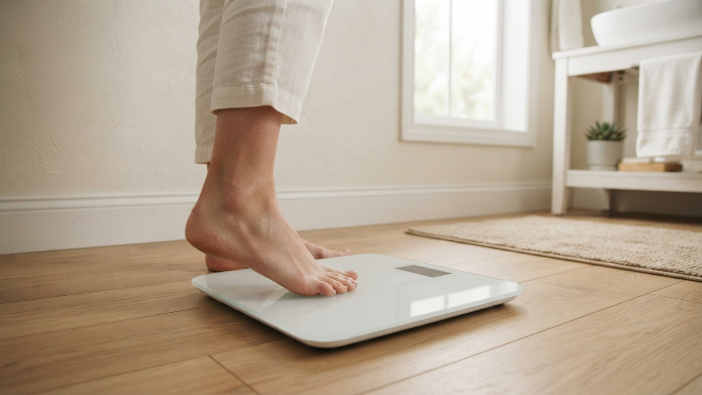
Here is the idea this entire article is built around: your bathroom scale cannot tell the difference between fat, water, food still in your digestive tract, or fluid your body is temporarily holding onto. It only reports total mass.
Body fat changes slowly. Realistic fat loss happens over days and weeks, not overnight, because losing roughly half a kilogram of actual fat requires a sustained calorie deficit, not a single meal or a single restless night.
Water, on the other hand, can shift by a kilogram or more within twenty four hours. That is the entire reason keto weight fluctuation feels so dramatic compared to other ways of eating.
You are not imagining bigger swings. Keto genuinely does move more water around than a typical moderate carb diet, especially early on and especially around specific triggers.
Why Keto Specifically Triggers Bigger Water Shifts
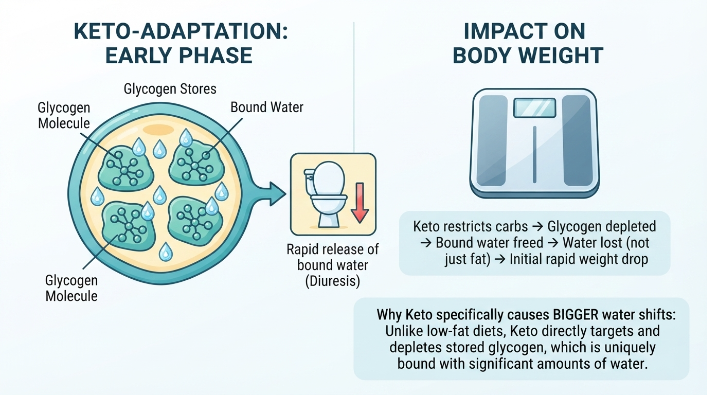
To understand keto diet water retention weight fluctuation, it helps to understand glycogen, the storage form of carbohydrate kept in your muscles and liver.
Glycogen does not sit in your body alone. Physiology research consistently shows that each gram of stored glycogen is bound to roughly three to four grams of water.
When you cut carbohydrates sharply, your body burns through those glycogen stores within the first few days, and all of that bound water is released along with it.
At the same time, lower carbohydrate intake reduces insulin levels. Insulin normally signals your kidneys to hold onto sodium. When insulin drops, your kidneys excrete more sodium, and water follows sodium out of the body through urine.
The Cleveland Clinic describes this shift as one of the main drivers behind early keto symptoms, commonly called keto flu, which includes fatigue and headaches alongside the fluid loss.
This combination explains why the first week or two of keto often brings a noticeably large drop on the scale. Some of that is genuine, some of it is water leaving fast, and separating the two matters for how you interpret your progress from that point onward.
Why Weight Can Rise Again Even While You Are Doing Everything Right
Once your body has adjusted, the same fluid systems keep working in the background, just less dramatically. A handful of situations reliably nudge the scale upward without any fat being involved.
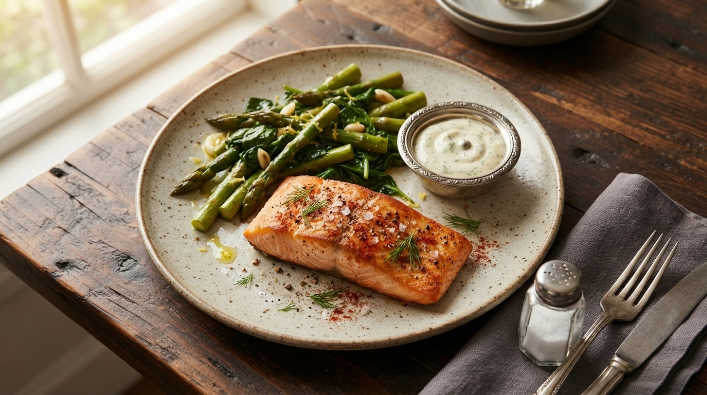
Sodium and salty meals. Sodium pulls water along with it, so a saltier meal or restaurant dish can show up as extra weight the next morning. This is not fat appearing overnight. It is fluid your body is temporarily holding to keep sodium and water balanced, and it usually settles within a day or two.
Carbohydrate increases. Eating more carbohydrate than usual, even a keto approved treat day, lets your body restock some glycogen and pull water back in with it. Rebuilding a few hundred grams of glycogen can look like a meaningful weight jump within twenty four hours, even though very little of it is fat.
Exercise, especially unfamiliar or intense sessions. Harder or new workouts cause small amounts of inflammation in the muscles used, part of normal repair, and this temporarily draws in fluid. It usually resolves within a few days as recovery finishes.
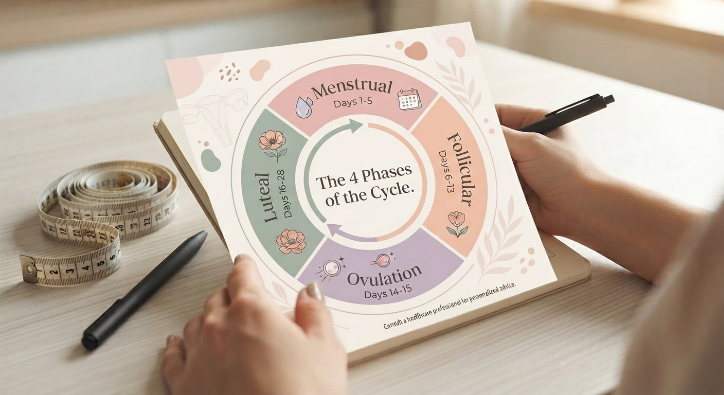
Hormonal and menstrual cycle changes. For women, the days leading up to a period commonly bring temporary fluid retention linked to shifts in oestrogen and progesterone.
Better Health Channel notes that hormonal fluctuation tied to the menstrual cycle is a well recognised, common cause of fluid retention, separate from anything to do with diet.
Constipation and digestive contents. Whatever is currently in your digestive tract has weight too. Keto is lower in fibre from grains, legumes and fruit than many people are used to, which can slow things down and add weight that has nothing to do with fat or even fluid.
Stress and poor sleep. Elevated cortisol from stress or short, disrupted sleep can also influence fluid retention, adding another layer to an already busy picture.
None of these situations, on their own, mean keto has stopped working.
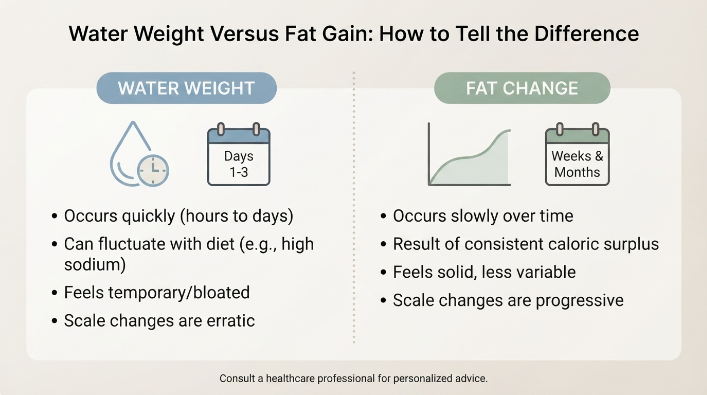
Water Weight Versus Fat Gain: How to Tell the Difference
The two are genuinely different, and there are a few practical signals that help separate them. Water weight tends to appear and disappear quickly, often within one to three days, with an obvious trigger such as a salty meal, a hard workout, or the days before a period. Fat gain builds gradually and requires a sustained calorie surplus over time, not a single event.
Water retention often comes with visible puffiness, particularly around the ankles, fingers or face, rather than the slower change in how clothes fit that accompanies real fat gain.
Pressing a finger firmly into the skin over your shin and seeing a visible indent for a few seconds is a classic sign of fluid retention rather than fat, though this is a general observation, not a diagnostic test.
The clearest signal of all is simply time. If a higher number is still there, unchanged, after a full week of consistent eating, it is far more likely to reflect something other than short term fluid.
What This Actually Means for Your Keto Progress
Nothing about temporary water fluctuation cancels out real progress happening underneath it. Fat loss can continue steadily even during a week where the scale barely moves or briefly ticks upward, because water changes and fat changes are two separate processes running at the same time, not one masking the other in a fixed, predictable way.
This is also why weight loss so often looks like a staircase rather than a smooth downward line. Days of no visible change, sometimes an uptick, are followed by a sudden drop as retained fluid finally clears. That pattern is normal, not a sign that something has gone wrong.
A Better Way to Track Keto Progress
If daily scale weight is the only measurement you rely on, keto weight fluctuation will almost always feel more discouraging than it should. A few adjustments make a real difference.
Weigh in at the same time under the same conditions, ideally first thing in the morning before eating or drinking, so you are comparing like with like.
Track a rolling weekly average rather than single days. Adding up seven daily weights and dividing by seven smooths out the noise from sodium, hormones, digestion and exercise, showing the underlying trend far more clearly than any individual reading.
Use a tape measure alongside the scale. Waist, hip and thigh measurements taken every one to two weeks often show change even during weeks when the scale stalls, because fat loss and fluid shifts do not always move together.
Take progress photos in consistent lighting and clothing. Visual change frequently shows up before the scale reflects it, particularly for anyone carrying water weight that is masking recent fat loss.
Pay attention to how your clothes fit. This is one of the most underrated markers, and one my own clients consistently mention as the first thing that changes.
Notice energy, strength and general wellbeing. These are not vanity metrics. They are meaningful signs your approach is sustainable, something a single number on a scale can never fully capture.
If body composition scanning is available to you, whether through a clinic, gym or GP referral, it can offer more insight than scale weight alone, though access varies and it is not something everyone needs.
When to Look Beyond Keto for an Explanation

Most weight fluctuation on keto is genuinely harmless and temporary, but a few situations deserve a proper look rather than being automatically blamed on the diet.
Persistent swelling that does not improve within several days, particularly in one leg only or accompanied by pain, redness or warmth, should be assessed by a doctor.
The same goes for sudden, unexplained weight gain of several kilograms within a day or two with no obvious cause, or any weight change paired with shortness of breath, chest discomfort or noticeable swelling around the eyes or abdomen.
Patient.info lists heart, liver and kidney related causes of fluid retention that require proper medical evaluation rather than dietary adjustment alone.
This is not intended to alarm anyone. The overwhelming majority of keto related fluctuation is exactly what this article describes, but it is worth knowing where the ordinary pattern ends and a conversation with a doctor genuinely belongs.
What to Actually Do When the Scale Jumps
Resist the urge to react immediately. Cutting calories further, dropping carbohydrates even lower, or restricting water because of a single higher reading almost always backfires. Reducing water intake in particular can worsen fluid retention, since your body responds to dehydration by holding onto fluid more tightly.
Keep eating and drinking normally, stay consistent with sodium rather than swinging between very high and very low intake, and give it three to five days before drawing any conclusion. Most jumps tied to a salty meal, a hard workout or a hormonal shift resolve entirely on their own within that window.
If a genuinely higher trend is still visible on your weekly average after two to three consistent weeks, that is the point to review your food intake, portion sizes and activity levels honestly, rather than reacting to any single day in isolation.
For anyone still working through the early adjustment period, our guide on keto energy and electrolytes covers how sodium and mineral intake affects those first couple of weeks in more depth, and if bloating or irregular digestion is part of what you are noticing, our piece on keto constipation walks through what tends to help.
The Bottom Line
Keto diet water retention weight fluctuation is one of the most misunderstood parts of low carb eating, largely because the scale never explains itself.
A rising number can mean sodium, glycogen, hormones, digestion, stress or a harder workout, and only rarely does it mean actual fat has appeared overnight.
Understanding the difference will not make the number stop moving day to day. What it does is stop you from making decisions, whether that is quitting keto altogether or cutting your intake too aggressively, based on a single confusing morning.
Track the trend, give your body time, and let the weekly average tell you the real story rather than any one reading on its own.
If you are still finding your footing with the basics of low carb eating, our complete keto guide is a good next stop for building a routine that holds up over the long run, fluctuations and all.
FAQs
Why does my weight go up overnight on keto?
Almost always because of water, not fat. A salty meal, a harder workout, a slightly higher carbohydrate day, or the days before a period can all cause your body to hold extra fluid temporarily, and that shows up on the scale far faster than fat ever could.
How much of keto weight loss is actually water?
In the first one to two weeks, a meaningful portion of the initial drop is water tied to depleted glycogen stores and reduced sodium retention. After that adjustment period, ongoing weight loss reflects a mix of continuing fat loss and smaller, normal day to day fluid shifts.
Can water retention hide fat loss that is actually happening?
Yes. It is entirely possible to be losing fat steadily while retained fluid masks that progress on the scale for several days at a time, which is exactly why a weekly average, measurements and how your clothes fit matter more than any single reading.
Should I drink less water if I think I am retaining fluid?
No. Cutting water intake tends to make retention worse, not better, because your body responds to dehydration by holding onto the fluid it does have more tightly. Staying consistently hydrated is the more effective approach.
Can my menstrual cycle really affect my keto weight?
Yes, this is well recognised and unrelated to whether keto is working. Hormonal shifts in the days before a period commonly cause temporary fluid retention regardless of what diet someone follows.
How long does a typical water weight fluctuation last on keto?
Most sodium or exercise related fluctuations settle within one to three days. Hormonal fluctuations tied to a menstrual cycle typically resolve within about a week as the cycle progresses.
When should I stop assuming it is just water weight?
If your weekly average is still trending upward after two to three consistent weeks, with no major changes to your eating or activity, it is worth reviewing your intake honestly rather than continuing to attribute it to fluid.
Is it normal for my weight to bounce around every single day on keto?
Yes, daily fluctuation of a kilogram or slightly more is common and expected, on keto and on most other ways of eating. It is the trend across a full week that actually reflects your progress.