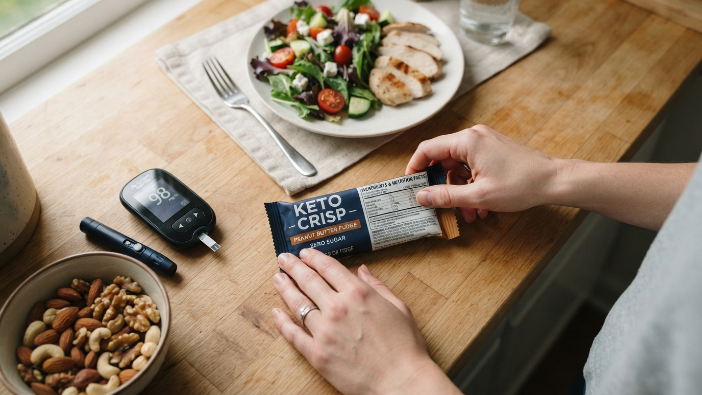
For years, I asked myself the same question that so many women with PCOS ask every day: “Can anything actually help me manage my symptoms?” Like many others, I struggled with stubborn weight gain, irregular periods, constant cravings, and the frustration of feeling like my body wasn’t responding to healthy eating.
After living with PCOS for several years and learning how insulin resistance affects hormone balance, I decided to follow a well-planned ketogenic lifestyle. I wasn’t looking for a miracle cure; I simply wanted to feel healthier and regain control of my body.
Over time, I lost weight, my energy improved, my cravings became easier to manage, and many of my PCOS symptoms started to improve. While keto didn’t reverse or cure my PCOS, it became one of the most effective tools in managing it.
In this article, I’m sharing both my personal experience and the latest scientific research to answer an important question: Can keto reverse PCOS symptoms, or does it simply help manage them? My goal is to give you an honest, evidence-based answer so you can make an informed decision about your own health.
Medical Disclaimer:
This article is based on my personal experience alongside current scientific research. It is for educational purposes only and should not replace advice from your GP, endocrinologist, or a registered dietitian. Always consult a qualified healthcare professional before making significant dietary changes or starting a new treatment plan.
What Is PCOS? Quickly Recapped
First, many women looking Can Keto Reverse PCOS Symptoms have to know what causes PCOS in the first place. Many circumstances of insulin resistance are much influenced by food choices like the ketogenic diet, hence this subject of study has grown in significance.
Usually diagnosed with the Rotterdam criteria, which searches for at least two of three characteristics:
- Erratic or lacking ovulation
- Above–average levels of androgen (male hormone)
- On ultrasound, polycystic-appearing ovaries
Underneath those characteristics, insulin resistance is the common thread running through most PCOS cases. When your cells don’t respond well to insulin, your body produces more of it, and excess insulin pushes your ovaries to produce more androgens like testosterone.
That’s the mechanism that drives a lot of PCOS’s more frustrating symptoms:
- Irregular periods
- Acne
- Excessive hair growth
- Weight that feels stuck no matter what you do.
This is also exactly why a carbohydrate-restricted diet like keto keeps coming up in PCOS conversations: it targets insulin directly.
Can Keto Reverse PCOS Symptoms? Honest Answer
If you’re wondering Can Keto Reverse PCOS Symptoms, the honest answer is that keto does not cure PCOS. However, growing research suggests it may significantly improve insulin resistance, hormone balance, weight management, and menstrual regularity in many women.
What the research does show is improvement sometimes substantial in the downstream symptoms: insulin levels, androgen levels, menstrual regularity, and fertility outcomes. That’s a meaningfully different claim than “reversal”, and it’s one worth sitting with, because it’s more honest and, frankly, more useful.
Stopping the diet usually causes insulin resistance and its consequences on PCOS symptoms to come back; therefore, keto is more a means of control than a cure. Also worth noting early on is that most of the studies below are short-term (weeks to months, not years), and sample sizes are typically limited.
That doesn’t make the findings meaningless, but it does mean “the research doesn’t show yet” is as important a phrase as “the research shows”. We’ll come back to that in the risks section (see why PCOS weight loss is so hard in the first place).
How Keto Affects the Root Causes of PCOS
Understanding Can Keto Reverse PCOS Symptoms starts with understanding insulin resistance. Keto works by reducing carbohydrate intake, helping lower insulin levels, which may improve several hormonal imbalances associated with PCOS.
Insulin Resistance and Blood Sugar
Because there is less glucose to handle first, limiting carbs lessens the amount of insulin your body has to generate. Both a 2017 systematic review and a 2019 meta-analysis found that reducing carbohydrates might help to fix hormonal imbalances linked to PCOS and therefore help to restore ovulation.
The basic reasoning is that less signal telling the ovaries to overproduce androgens results from reduced circulating insulin.
Androgens (Testosterone) and Hirsutism/Acne
This is where the insulin-androgen link shows up most clearly in the data. A 2020 study (Merra et al., published in the Journal of Translational Medicine) followed women with PCOS on a ketogenic Mediterranean diet for 12 weeks.
Found increases in progesterone and oestrogen together with roughly 9 kg of weight reduction across the study period together with testosterone and luteinising hormone (LH).
Though it takes longer for skin and hair changes to show up than for blood indicators to move, lower testosterone is directly associated with symptoms like acne and excess hair growth (hirsutism).
Ovulation and Menstrual Regularity
Among the whole body of research, one could say this is the most amazing discovery. Every participant in a 2023 Frontiers in Nutrition study recovered normal menstrual cycles after three months on a ketogenic diet; 55.6% of those actively attempting to conceive got pregnant within the study window.
Though a small study, it presents a very fascinating indicator for anyone whose PCOS symptoms center on missing or erratic cycles
For more on why this pathway makes weight loss so uniquely difficult with PCOS in the first place, see ‘Why Can’t I Lose Weight with PCOS?’
And because anti-inflammatory fats matter alongside insulin management, our best fish for PCOS guide is worth pairing with anything you take from this section.

What the Research Actually Shows (Study-by-Study)
Clinical studies investigating Can Keto Reverse PCOS Symptoms consistently report improvements in metabolic health, hormone levels, and ovulation. While the evidence remains limited, the overall trend is encouraging.
Study Year Duration Sample Size Key Finding
Merra et al., Journal of Translational Medicine, 2020, 12 weeks Women with PCOS (ketogenic Mediterranean diet) ↓ testosterone and LH; ↑ progesterone and oestrogen; ~9 kg weight loss
Frontiers in Nutrition study, 2023, 3 months A small cohort trying to conceive 100% regained regular cycles; 55.6% of those trying achieved pregnancy
Cleveland Clinic PCOS/fertility pilot Ongoing Multi-month Started at 4 patients, expanded to 35. Keto is used to target insulin resistance, improving ovulation and fertility-treatment outcomes
Early keto/PCOS study (2005, 6 months): 11 enrolled, 5 completed Weight loss and improved hormonal markers; 2 of 5 conceived despite prior infertility
PMC scoping report for 2025. Eight study synthesis (2019-2025) Old keto and keto-Mediterranean Confirms weight loss and symptom improvement but clearly notes the limited and short-term nature of the evidence base
Two previous reviews confirm this to a higher degree; a 2017 systematic review and a 2019 meta-analysis show that limiting carbohydrates aids in the correction of PCOS-related hormone imbalance and stimulates ovulation to come back.
Taken together, the trend over some two decades of small research is obvious: reducing carbs usually reduces insulin and androgens, which in turn helps cycles and fertility.
What’s consistent too, though, is the caveat every single review repeats: these are small samples, short durations, and results that haven’t yet been replicated at scale. That’s not a reason to dismiss the findings. It’s a reason to treat keto as a promising management tool, not a guaranteed fix.
What Changed When I Went Keto for PCOS
My personal experience doesn’t prove Can Keto Reverse PCOS Symptoms, but it does show how improving insulin resistance through keto positively affected many of my symptoms over time.
I had been dealing with my own PCOS symptoms – irregular periods, acne along my jawline, and weight that wouldn’t go down – for years when I started keto.
The only largest lever I used during my own 40 kg weight reduction path was cutting carbohydrates and giving protein first importance; the hormonal symptoms paralleled the weight, not followed it.
My cycles became more predictable within a few months, which lines up with what the Frontiers in Nutrition timeline above suggests is realistic, not exceptional.
I’ve written the full, detailed version of that story – numbers, setbacks, and all – in my 40kg keto and PCOS journey, if you want the lived-experience version alongside the research above.

The Risks and Limitations You Should Know
This is the section most keto-and-PCOS content skips or buries in a one-line disclaimer. It shouldn’t be. Whatever you think about the aforementioned research, the hazards should be equally weighted.
One really potential condition is nutrient deficiency. Unless the diet is well thought out, cutting entire food groups—fruit, pulses, and many grains—reduces fibre, some B vitamins, and micronutrients. This is one reason a keto approach for PCOS should look different from a generic “bacon and cheese” version.
Disordered eating risk needs to be named honestly. For anybody with a history of disordered eating, strict diets can be quite disruptive. If that’s in your story, a very restricted diet like keto might not be the best tool; a discussion with a doctor or therapist before beginning is more important than any macro breakdown.
Not every case of PCOS is the same; therefore, keto is not always appropriate for it. Lean PCOS and adrenal-type PCOS often don’t share the same insulin-resistance profile that drives benefit in the studies above, so the mechanism keto relies on may simply apply less.
Cortisol and stress hormones are worth watching. Very limited diets can cause some people’s stress-hormone production to increase, therefore counteracting the exact hormonal balance you’re aiming to restore.
None of this suggests that most women with PCOS who try it carefully should avoid keto. It means “Is this safe for me particularly?” is a legitimate inquiry that begs a particular response, ideally from your GP or a qualified dietitian who understands your background, not a blanket one. Yes, from the internet.
Who Should (and Shouldn’t) Try Keto for PCOS
Although many people ask Can Keto Reverse PCOS Symptoms, it’s equally important to understand that keto isn’t suitable for everyone. Individual health conditions, nutritional needs, and medical history should always be considered.
If your PCOS presentation involves clear insulin resistance, higher fasting insulin, weight that concentrates around your midsection, and strong sugar cravings, the mechanism behind the studies above is more likely to apply to you.
If you have lean PCOS (a normal or lower BMI with PCOS symptoms) or suspect an adrenal-driven presentation rather than an insulin-driven one, keto’s core lever lowering insulin may have less to offer, and a more moderate, less restrictive approach is often more appropriate.
If you have a history of disordered eating, a thyroid condition, or you’ve had your gallbladder removed, this is a “talk to your doctor first” situation, not a “try it and see” one.
For a gentler entry point once you’ve had that conversation, our complete keto guide covers the fundamentals before you layer PCOS-specific adjustments on top.
What Leading Medical Experts Say About Keto for PCOS
Trusted healthcare organisations and researchers agree on one important point: while keto isn’t a cure for PCOS, it may be an effective tool for managing insulin resistance and improving several symptoms. The examples below explain why.
Cleveland Clinic – Clinical Case (Best Match)
Dr Ula Abed Alwahab and her team followed women with PCOS and infertility on a ketogenic diet. The study focused on improving insulin resistance, restoring ovulation, and supporting fertility, not curing PCOS.
Diet Doctor (Evidence-Based Medical Review)
Diet Doctor’s medically reviewed article explains that women with PCOS often experience improved insulin resistance, weight loss, and menstrual regularity on a low-carb or ketogenic diet. It also makes it clear that PCOS is managed, not cured, which aligns perfectly with your article.
PubMed Scoping Review
This scoping review evaluated multiple studies and reported improvements in androgen levels, insulin resistance, menstrual regularity, fertility outcomes, and metabolic markers after short-term ketogenic diets in women with PCOS. The authors also note that the evidence is promising but still limited.
Final Thoughts
One lesson my PCOS path has shown me is that there are no quick answers. Feeling annoyed and wondering why my body would not react as I hoped, I tried several diets for years.
Can Keto Reverse PCOS? Keto didn’t cure my PCOS, but it helped me lose weight, improve my relationship with food, manage my cravings, and feel more in control of my health.
That’s why I wanted to share both my personal experience and the research behind it so you can make an informed decision instead of relying on myths or unrealistic promises.
As you negotiate your own PCOS path, I really hope this paper has given you more clarity and assurance.
A Note: I am not a doctor or medical professional. Along with the scientific studies I have studied during my road, all I have provided here comes from my own experience living with PCOS., along with the scientific research I’ve studied throughout my journey. Every woman’s body responds differently, so what worked for me may not work exactly the same for you. If you decide to try a ketogenic lifestyle, stay consistent, be patient with yourself, and always work with your GP or a registered dietitian before making significant dietary changes. I sincerely hope my journey helps make yours a little easier.

Frequently Asked Questions
Can Keto Reverse PCOS Symptoms Permanently?
No. Current research suggests keto can improve insulin resistance, hormone balance, weight management, and menstrual cycles, but there is no evidence that it permanently reverses or cures PCOS.
Does keto help with PCOS-related infertility?
Several small studies suggest it can. The 2023 Frontiers in Nutrition study found over half of participants trying to conceive did so within the study period, and Cleveland Clinic’s pilot work specifically targets insulin resistance to support fertility treatment outcomes. This isn’t a guarantee, and fertility support should still involve a doctor.
Is keto better than the Mediterranean diet for PCOS?
There isn’t strong head-to-head evidence declaring one universally superior. Interestingly, the 2020 Merra et al. study used a ketogenic Mediterranean hybrid, suggesting the two approaches may work well combined rather than as competitors.
Is Keto Diet Good for Women with PCOS?
Many women with insulin-resistant PCOS experience improvements in weight loss, blood sugar control, and hormonal health on a well-planned ketogenic diet, although individual results vary.
Do I need to be in ketosis to see PCOS benefits?
Not necessarily. Much of the benefit in the research traces back to carbohydrate reduction and improved insulin sensitivity generally, not strict ketosis specifically, which is part of why lower-carb approaches short of full keto can still help some women.
How Long Does Keto Take to Improve PCOS Symptoms?
Some studies report improvements within 8–12 weeks, especially in insulin sensitivity and menstrual regularity, while other symptoms may take longer to improve.