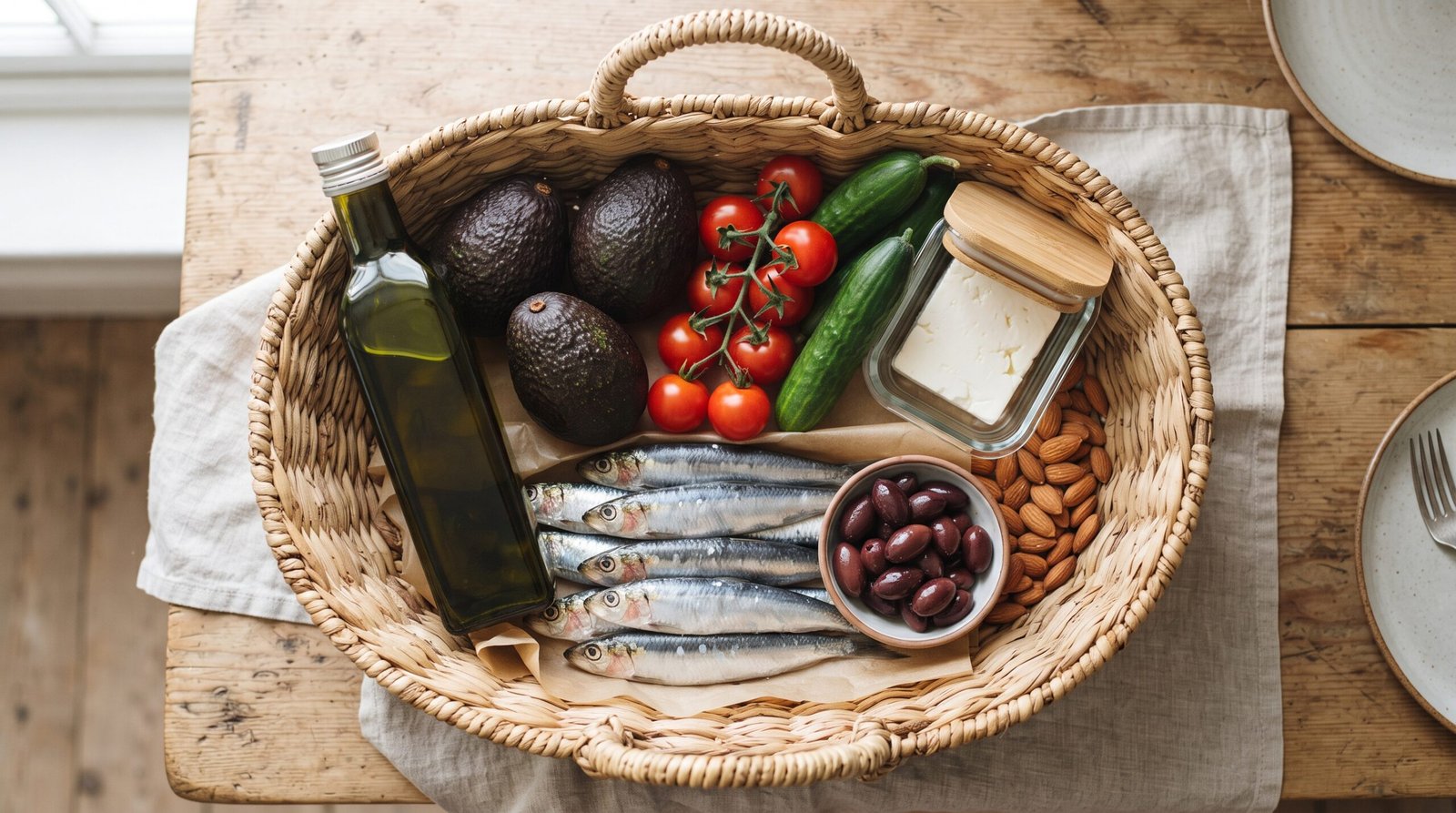
I’ve had this exact moment myself, standing in the aisle with a jar of olives in one hand and a bag of chickpeas in the other, genuinely unsure if either one belongs in a keto trolley. Turns out that’s a really common thing to get stuck on, and it’s basically the reason this guide exists.
Before writing any of this, I went through weeks of nutrition research, UK and US dietary guidance, and a fair number of real Mediterranean style keto meal plans people have actually used.
And here’s the thing I kept noticing: it’s rarely keto itself that trips people up, and it’s rarely the Mediterranean diet either. It’s the space in between, where the two agree on some things and quietly disagree on others, that causes the confusion.
Quick note before we get into it. This is written for general education, not as medical advice, and it doesn’t replace a conversation with your GP, a registered dietitian, or whoever manages your care.
Keto isn’t automatically the right fit for everyone. If you’re pregnant, managing a health condition, on medication that interacts with diet, or working through a history of disordered eating, please talk to someone qualified before changing how you eat.
So here’s what you’ll walk away with. A clear sense of what actually belongs in your trolley for Mediterranean keto, what to leave behind on the shelf, how to spot hidden carbs on a label, and two realistic examples, one for someone just starting out and one for someone shopping on a tight schedule, showing how this plays out in practice.
What Mediterranean Keto Actually Means
Mediterranean keto isn’t just standard keto with a bit of olive oil drizzled on for effect. It’s its own thing, a low carbohydrate way of eating shaped by the food culture found along the Mediterranean coast, think Greece, southern Italy, and Spain.
The traditional Mediterranean diet, as described by Harvard’s Nutrition Source, leans heavily on a pattern that a doctor may recommend for chronic conditions like heart disease and high blood pressure, drawing on the traditional eating habits of countries that border the Mediterranean Sea.
Ketogenic eating asks for something different: carbohydrates low enough, generally under fifty grams a day and often closer to twenty to thirty grams net, to shift your body toward burning fat for fuel, as covered in more depth in our master guide to the ketogenic diet.
Combine the two and you get a diet built on olive oil, oily fish, low carb vegetables, cheese, nuts, olives and herbs, while bread, pasta, rice, most fruit and larger portions of legumes shrink dramatically.
The biggest misconception I found in my research was assuming every food on a Mediterranean plate is automatically keto friendly. It is not, and the sections below explain why.
The Complete Mediterranean Keto Grocery List
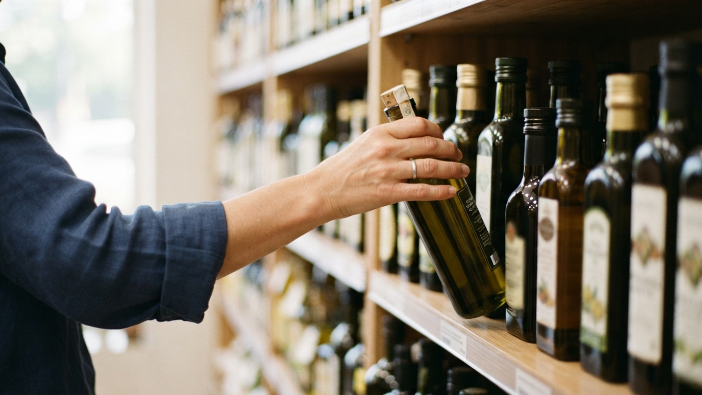
I could’ve just thrown every single food at you in one massive list, but honestly, that’s not how anyone actually shops.
So I’ve broken it down by category instead, the way you’d naturally walk through a supermarket. Each bit covers what’s worth buying, what to check before it goes in the trolley, and any portion stuff you should know going in.
Healthy fats and oils
Olive oil is doing most of the heavy lifting in this whole style of eating, so it’s worth being a bit fussy about it.
Check for a harvest date on the bottle, go for dark glass over clear, and make sure it actually says extra virgin, not just implies it.
The refined and blended stuff loses a lot of what makes real olive oil worth the price, both in flavour and in the good compounds that come with it.
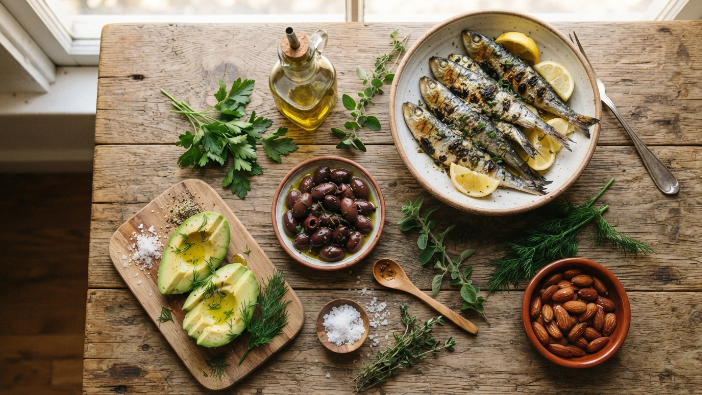
Beyond that, grab avocados, olives in whatever colour you like, and a bit of ghee or grass fed butter for anything that needs higher heat.
None of these really cost you carbs, so this is one area where you’re chasing quality, not counting quantity.
Protein and seafood
Sardines, mackerel, anchovies, salmon, this whole family of oily fish is low carb by nature and loaded with omega 3s, and honestly the tinned versions are just as good a shout as fresh, especially when you want something on hand without much effort.
Fill out the rest of your protein with eggs, chicken, shellfish, and red meat now and then. If fish is going to be a bigger part of your meals, our guide to the best fish choices for PCOS weight loss has some genuinely useful, budget friendly tips that work here too.
Low carb vegetables
This is where Mediterranean and keto basically shake hands. Leafy greens, courgette, cucumber, aubergine, broccoli, cauliflower, spinach, rocket, peppers, all of it is naturally low carb and all of it shows up constantly in Mediterranean cooking anyway.
Tomatoes work too, just don’t go overboard since they carry a bit more natural sugar than something like spinach.
Buy fresh when it makes sense, and don’t feel bad reaching for frozen when it doesn’t. Frozen spinach, cauliflower, green beans, they hold onto their nutrition way better than people assume.
Dairy
Greek yoghurt, feta, halloumi, a good hard cheese like parmesan, these are staples, but dairy is actually one spot where you really do need to read the label.
Plain full fat Greek yoghurt and the flavoured stuff can look almost identical on the shelf and be worlds apart in sugar content, something we go into more in our guide to probiotic foods for a keto diet.
And cheese, people tend to treat it like it has no ceiling just because it’s technically low carb. It is low carb, sure, but it’s also calorie dense, so it’s still worth keeping an eye on how much you’re eating.
Nuts, seeds, herbs and spices
Almonds, walnuts, pistachios, pine nuts, pumpkin seeds, tahini, all solid choices, just buy them raw or dry roasted rather than the ones coated in honey or some sweet glaze, since those flavoured versions sneak carbs into every handful without you really noticing.
Garlic, oregano, basil, rosemary, thyme, cumin, smoked paprika, these cost you next to nothing carb wise and they’re honestly doing most of the actual work when it comes to making the food taste like something you’d want to eat again.
Fruit and berries
Raspberries and strawberries are your best bet here, mostly because they’re lower in sugar relative to how much you’re actually eating.
Stick to a small handful rather than a full bowl and you’ll stay comfortably within a keto friendly range.
Pantry and optional foods
Canned tomatoes with nothing added, olives in brine, capers, apple cider vinegar, and maybe a square or two of high cocoa dark chocolate, these round things out nicely.
As for chickpeas and lentils, yes, they’re proper Mediterranean staples, no argument there, but they do carry real carbs.
Best to treat them as something occasional rather than a food you’re building meals around every day if you’re keeping things strictly keto.
Mediterranean Keto Grocery List Table
| Food category | Best Mediterranean keto choices | What to check on the label | Keto consideration |
| Fats and oils | Extra virgin olive oil, avocado, olives | Harvest date, “extra virgin” wording | Essentially carbohydrate free, prioritise quality |
| Protein and seafood | Sardines, mackerel, salmon, eggs, prawns | Packed in oil or brine, no added sugar | High protein, minimal carbohydrate |
| Vegetables | Spinach, courgette, cauliflower, peppers | Fresh or plain frozen, no sauces added | Base your plate here, watch tomato portions |
| Dairy | Plain Greek yoghurt, feta, halloumi, parmesan | Plain versus flavoured, added sugar | Full fat plain versions are lowest in carbs |
| Nuts and seeds | Almonds, walnuts, tahini, pumpkin seeds | Raw or dry roasted, no honey coating | Nutrient dense but easy to overeat |
| Fruit | Raspberries, strawberries, small portions | Fresh or unsweetened frozen | Keep portions small and occasional |
| Legumes | Chickpeas, lentils, in small portions | Dried versus tinned, net carbs per serving | Requires portion awareness on strict keto |
How to Choose the Best Foods for a Mediterranean Keto Shopping List
If there’s one habit worth stealing from me, it’s this: do your shopping around the edges of the store before you go anywhere near the middle aisles.
Produce, the fish counter, dairy, meat, that’s almost always where the real food lives, whether you’re in a UK supermarket, a US grocery chain, somewhere in Canada or Australia, doesn’t matter. The middle aisles are where the processed, carb heavy stuff tends to hide out.
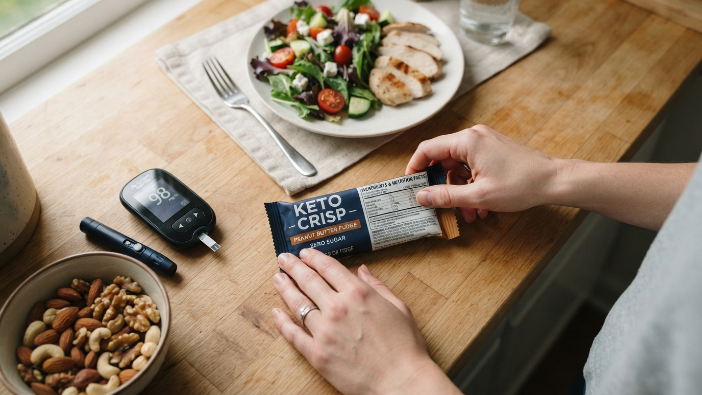
Go for whole foods over anything with “keto” slapped on the packaging as a selling point. A block of plain cheese and a handful of olives will get you further than some bar with fifteen ingredients you can’t pronounce, and it’ll usually cost you less too.
That holds whether you’re at a big chain or a small independent shop down the road, or picking things up at a farmers market on the weekend.
Foods to Limit or Avoid on Mediterranean Keto
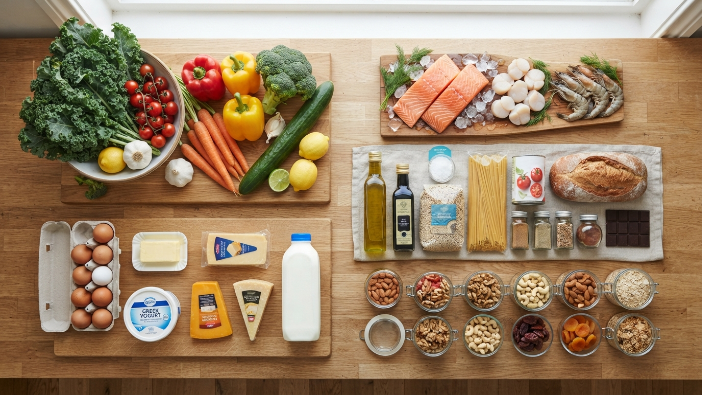
Here’s something worth saying plainly: Mediterranean doesn’t automatically mean keto friendly, and that trips up a lot of people just getting into this.
Crusty bread, pasta, rice, couscous, a big bowl of beans or lentils, these are all completely normal in a traditional Mediterranean diet, but they carry more carbs than a ketogenic approach can really absorb.
Sauces are the other sneaky one. Balsamic glaze, a lot of bottled dressings, they taste savoury but often have more sugar tucked in than you’d guess just from the flavour.
Sweetened yoghurt, most desserts, anything sugar sweetened to drink, and higher sugar fruit like grapes or dried apricots fall into that same “watch it” category.
None of this makes these foods bad, to be clear. It just means they don’t really fit inside strict Mediterranean keto.
Keep them as something you have occasionally rather than daily, and your carb intake stays roughly where you want it.
If you want to go deeper on this, our guide to foods that spike blood sugar on keto is a good one to read alongside this article.
Reading Labels for a Mediterranean Keto Grocery List
Label reading is where a lot of shopping mistakes happen. Check total carbohydrates first, then subtract fibre for a rough sense of net carbohydrates, since fibre rich vegetables and nuts often look higher in total carbs than they actually cost you.
Pay close attention to added sugars, which hide in flavoured yoghurt, bottled sauces, cured meats and pre marinated proteins, and check serving size too, since a small serving size can make a high carbohydrate product look deceptively low carb.
Any product marketed as “keto” is worth checking just as carefully as anything else, since the label alone does not guarantee a genuinely low carbohydrate recipe underneath it.
Expert Tips for Building a Mediterranean Keto Grocery List
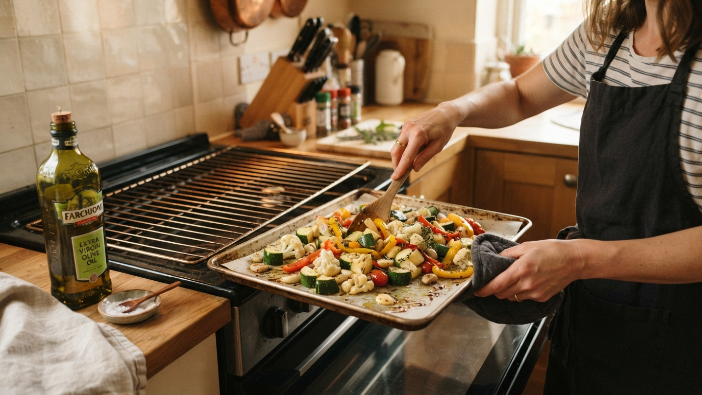
Here’s what actually makes a difference once you’re at the checkout. Stop trying to buy for variety and pick four or five meals you’ll happily eat on repeat. Grilled fish with a tray of roasted vegetables, a Greek style salad, eggs with spinach and avocado on the side. That’s genuinely most of what you need in rotation.
Spend a bit more on decent extra virgin olive oil and don’t ration it. It carries more of the flavour and the fat content than people give it credit for. On a Sunday, throw a whole tray of vegetables in the oven at once so there’s always something ready during the week without extra effort.
And skip the products with “keto” printed across the front simply because it’s there. Nine times out of ten, plain ingredients get you further, and cheaper too. Rotate your protein through the week rather than leaning on the same two or three things, both for your plate and your wallet.
Common Mediterranean Keto Grocery Shopping Mistakes
The one I see constantly: people assume that because a food is Mediterranean, it’s automatically keto. Bread and pasta come from that region too, and neither belongs on this list. Swapping courgette for couscous because they both “feel” Mediterranean is where a lot of carb budgets quietly fall apart.
Sweetened Greek yoghurt sneaks past people because the tub looks nearly identical to the plain version until you actually flip it over. Sauces and dressings get ignored more often than they should.
Cheese gets treated like it has no limit just because it’s technically low carb, which isn’t quite the same as unlimited. Nuts disappear from the bag faster than anyone plans for, especially the flavoured kind, and a “small portion” of chickpeas or tomatoes has a way of turning into a much bigger one without anybody noticing.
Real Life Mediterranean Keto Grocery Examples

Quick disclaimer before this bit: these are made up scenarios to show how the shopping list plays out, not stories from actual customers.
Say you’re brand new to this. Your basket might end up with eggs, a few tins of sardines, some chicken thighs, spinach, courgette, cauliflower, feta, plain Greek yoghurt, olive oil, olives and a small bag of almonds.
Honestly, that’s it. That handful of things covers most of your meals for several days and you don’t need to know a single fancy recipe. Now say you’re someone who barely has time to breathe, let alone cook. You’d probably lean harder on shortcuts.
Bagged salad instead of washing your own leaves, frozen veg instead of prepping fresh, tinned fish, a rotisserie chicken from the deli counter, a block of hard cheese, and a bottled dressing you’ve actually bothered to check the label on. It’s not lower quality food, it’s just less thinking involved.
Building Meals Around Your Mediterranean Keto Grocery List
Once you’ve actually got the groceries home, putting meals together isn’t complicated. It’s really just assembly at that point.
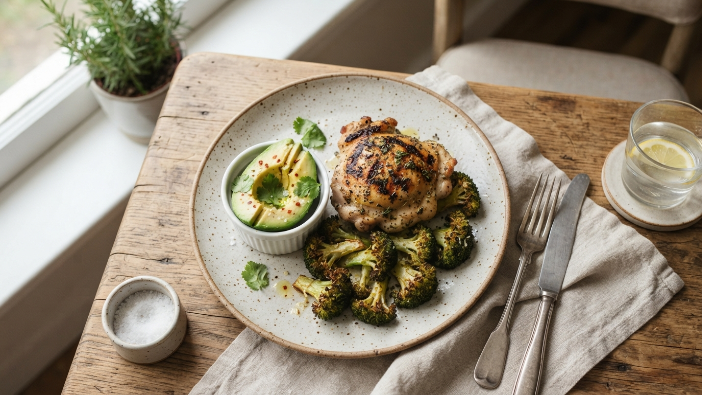
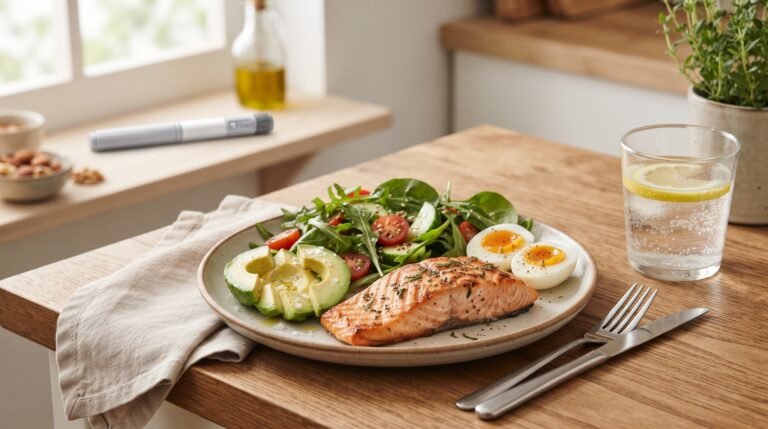
Grab a protein, pile on a generous amount of low carb vegetables, add a fat source, throw some herbs on top. Salmon with roasted broccoli and a bit of lemon squeezed into olive oil works. So does a bowl of chicken, cucumber, tomato, feta and olives.
Neither one asks you to buy anything you haven’t already got in the fridge. Want more structure than that? Our guide to affordable keto meal prep goes into batch cooking that pairs nicely with all this.
Conclusion
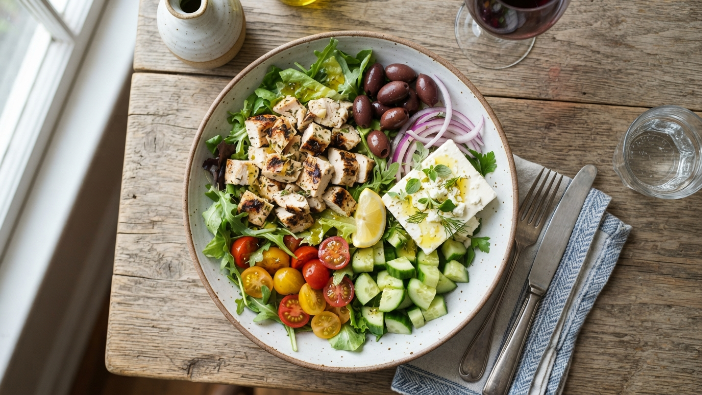
At the end of the day, this whole list comes down to one idea: figure out where Mediterranean eating and keto actually line up, olive oil, seafood, vegetables, cheese, herbs, and figure out where they don’t, mostly bread, grains, fruit and legumes.
Keep it somewhere you’ll genuinely look at before you shop, get in the habit of checking labels for hidden sugar, and build your basket around a small rotation of go to meals instead of trying to buy for every possibility at once.
If you only remember one thing from all this, let it be that the list is a starting point, not a rulebook carved in stone. Bend it to fit your own health, your budget, and whatever’s actually realistic to cook in your kitchen on a Tuesday night.
Mediterranean Keto Grocery List FAQs
What is a Mediterranean keto grocery list?
Basically a shopping list built around the usual Mediterranean staples, olive oil, seafood, low carb vegetables, cheese, nuts, herbs, but kept within a carb range that still lets you stay in ketosis.
What foods are included in Mediterranean keto?
Olive oil, oily fish, eggs, leafy greens, courgette, cauliflower, olives, feta, Greek yoghurt, nuts, seeds and herbs. Bread, pasta, rice and most fruit either get cut back a lot or disappear from the list entirely.
Can you follow a Mediterranean diet while staying in ketosis?
You can, yeah, but it takes a bit of adjusting. You’ll need to pull back on whole grains, most legumes and higher sugar fruit, while keeping olive oil, seafood and vegetables doing most of the heavy lifting.
Is olive oil good for Mediterranean keto?
Definitely. Extra virgin olive oil is basically carb free and it’s the backbone of this whole approach. UK dietetic guidance generally points to a good intake of fat from a mix of sources, cheese, yoghurt, olive oil, avocado, oily fish and nuts, as part of a healthy Mediterranean pattern.
What vegetables can I buy for Mediterranean keto?
Leafy greens, courgette, cucumber, aubergine, broccoli, cauliflower, peppers and spinach are all safe bets. Tomatoes are fine too, just don’t go overboard, keep them to moderate portions rather than treating them as unlimited.
Can I eat fruit on Mediterranean keto?
A small handful of berries here and there works fine. Grapes, figs and dried fruit though, those carry enough sugar that you’ll want to keep them limited if you’re being strict about ketosis.
Are beans allowed on Mediterranean keto?
Chickpeas and lentils are proper Mediterranean staples, no argument there, but carb wise they add up fast. Best treated as something you have occasionally rather than something you build a meal around every day.
What should I avoid when shopping for Mediterranean keto foods?
Bread, pasta, rice, sugary sauces, sweetened yoghurt, desserts, anything sugar sweetened to drink, and big portions of legumes. Those are the ones worth skipping or at least cutting way back on.