Medical Disclaimer: This article is for educational purposes and reflects a review of publicly available research and expert commentary. It isn’t a substitute for personalised medical advice. If you have diabetes, prediabetes, or take any glucose-lowering medication, speak with your GP, endocrinologist, or a registered dietitian before making significant changes to your diet.
Here’s the thing nobody tells you when you start keto: you can do everything “right” and still get blindsided. You’ve cut the bread, swapped rice for cauliflower, and you’re tracking net carbs like it’s a part-time job — and then your glucose meter throws up a number you can’t explain.
Or maybe there’s no meter involved at all, just that foggy, slightly-off feeling an hour after a meal that was, on paper, completely keto. If that’s happened to you, you haven’t messed up.
You’ve just bumped into something most keto guides skip over: not everything wearing a “keto-friendly” label is actually neutral for your blood sugar.
Some of the foods that spike blood sugar to avoid on keto aren’t hiding in the obvious places — they’re sitting on your counter in packaging that says “sugar-free,” “low-carb,” or “keto-certified.”
This guide goes through which foods and ingredients actually deserve your attention, why they act the way they do once they’re in your body, and what a swap that actually holds up looks like — based on NHS, Diabetes UK, and Harvard Health research, not forum guesswork.
What Are Foods That Spike Blood Sugar to Avoid on Keto?
At its simplest, this means foods and ingredients that push your blood glucose up faster or higher than you’d expect — even when they technically fit inside a low-carb framework. The obvious ones are easy to spot: bread, rice, sugary drinks.
Harder to catch is the second group — products labelled low-carb or keto-friendly that still carry enough digestible carbohydrate, added sugar, or the wrong kind of sugar alcohol to trigger a real glucose response anyway.
Researchers usually reach for the glycaemic index (GI) to explain this. It ranks carbohydrate-containing foods from 0 to 100 based on how quickly they raise blood sugar after eating, and anything 55 or under counts as a slower, “slow-release” rise.
But GI on its own won’t tell you the whole story if you’re doing keto, because portion size, what you’re eating it with, and your total carb load for the day all change how a food actually plays out in your body.
Diabetes UK makes this point directly — GI doesn’t factor in portion size, and portion size can move the needle more than the ranking itself.
Why Blood Sugar Spikes Can Matter on a Keto Diet
Ketosis works on a fairly simple premise: keep carbs low enough, keep insulin low enough for long enough, and your body switches over to burning fat and ketones instead of glucose.
A real blood sugar spike works directly against that. It triggers an insulin release, and insulin’s job is basically the opposite of what you want here — it tells your body to stop breaking down fat and start storing it.
That said, one slightly-higher-than-expected reading isn’t a disaster. A small rise in blood sugar after a keto meal usually isn’t something to worry about unless it’s significantly high or it keeps happening — protein alone can nudge glucose up a little now and then, and that’s just normal metabolism, not a sign you’ve blown it.
What matters more is a pattern. Repeated, uncontrolled spikes over time are linked to insulin resistance, type 2 diabetes, and heart disease — which, ironically, is often the exact territory people start keto trying to get away from.
Honestly, the mistake I see most often — in comments, in forums, everywhere — is people treating “in ketosis” and “blood sugar under control” as the same thing. They overlap a lot, but they’re not identical.
You can be technically ticking along in mild ketosis while your glucose is still getting knocked around more than you’d like, especially if a lot of your food is coming from packaged “keto” products instead of actual whole food.
Foods That Spike Blood Sugar to Avoid on Keto
Here’s a rundown by category — starting with the obvious culprits and working toward the ones that catch even experienced keto dieters off guard.
Sugary drinks. Fruit juice, regular soda, sweetened iced tea, most “healthy” flavoured drinks — these are concentrated sugar with essentially nothing in them to slow digestion down. No fibre, no buffer, so glucose shoots up fast.
This is the spike everyone pictures when they hear the term. A single one of these can eat up more carbs than your entire day’s keto budget, so it’s worth swapping for something like citrus- or mint-infused water, unsweetened sparkling water, or plain black coffee or tea.
Sweets and desserts. Cakes, biscuits, pastries — refined flour plus added sugar, with almost nothing to slow the rise. And here’s the trap: a lot of “keto dessert” alternatives just swap one problem for another by leaning on sugar alcohols, which — as you’ll see below — aren’t automatically off the hook either.
Berries with full-fat cream in small portions, or desserts built on almond flour with erythritol rather than maltitol, tend to hold up better.
Refined grains and bread. White bread, white rice, regular pasta — the bran and germ are stripped out during processing, leaving mostly starch that digests fast.
Harvard Health has actually compared a serving of white rice to eating table sugar in terms of how quickly and how high it pushes blood sugar, while less-processed whole grains tend to raise it more slowly and by less.
These are already off the table on keto for obvious reasons, but they’re worth naming outright, because “just one slice” of white bread is a pretty common slip point.
Our guide on how to make perfect low-carb keto bread covers almond and coconut flour versions that stay low in net carbs without the same glucose hit.
High-carb breakfast foods. This category is sneaky because it hides behind health marketing. Sweetened cereals get labelled “wholegrain” or “high fibre” and still carry plenty of added sugar.
Even things that sound virtuous — instant oatmeal, granola with dried fruit, flavoured yoghurt with fruit syrup at the bottom — add up fast.
And breakfast tends to set the tone for the rest of your day glucose-wise, so a high-carb start often means cravings creeping back by mid-morning.
Eggs, full-fat Greek yoghurt with a small handful of berries, or something savoury from our 30+ best low-carb, high-protein keto snacks list are more reliable options.
Sugary sauces and condiments. This one deserves more than a passing mention, so it gets its own section further down — it’s genuinely one of the most overlooked sources of hidden carbs on keto.
“Healthy” foods that carry more carbs than people expect. Some foods have a reputation that outruns their actual carb content once you’re on keto.
Sweet potato and corn are a good example — Harvard Health places white and sweet potatoes, corn, and white rice in the moderate glycaemic range, which puts them in a different league from the non-starchy vegetables most keto meal plans are built around.
Plant-based milks are another one worth watching: plain unsweetened almond or coconut milk is fine, but the flavoured or sweetened versions — even ones marketed as “natural” — can carry more sugar than you’d assume from the front label.
Processed “keto” products that don’t all behave the same way. This is where people who’ve been doing keto a while, not beginners, tend to get tripped up.
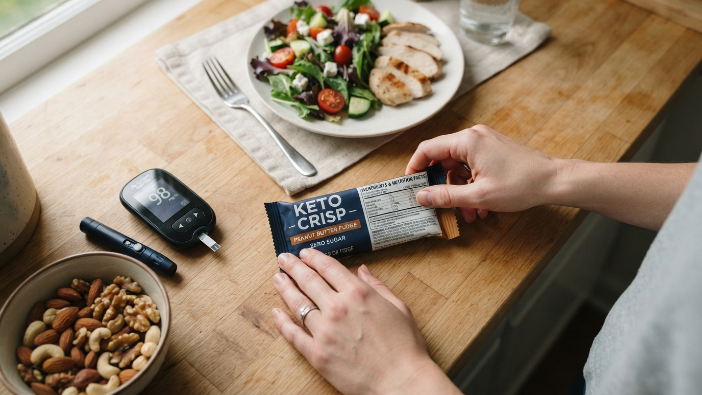
Protein bars, “keto” chocolate, sugar-free syrups, low-carb baked goods — a lot of these lean on sugar alcohols to hit their carb targets, and not every sugar alcohol acts the same once it’s in your body.
Erythritol mostly passes through the bloodstream without being used for energy and gets excreted largely unchanged, so its glycaemic impact is close to zero.
Maltitol and sorbitol are a different animal — they’re only partially digested and can still raise blood glucose — which is exactly why nutrition guidance usually says to subtract them from net carbs only partially, not in full the way you would with erythritol.
Keto concern: A product can legitimately say “sugar-free” and still measurably raise blood glucose because of the specific sugar alcohol used.
Better swap: Check the ingredients list, not just the “net carb” number on the front of the pack — erythritol- or allulose-sweetened products are a more reliable choice than those using maltitol or maltodextrin.
How Sauces, Condiments, and “Small” Additions Add Up
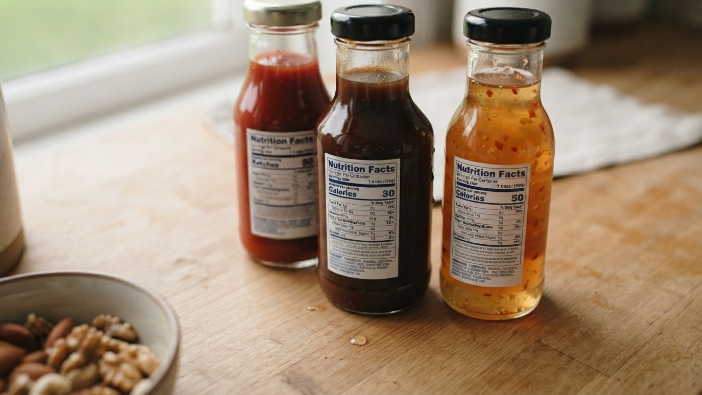
Ketchup, barbecue sauce, sweet chilli sauce, teriyaki marinade, and many salad dressings are worth flagging separately because people rarely think of them as a “food” they’re eating in a meaningful quantity — a couple of tablespoons here, a drizzle there.
But those small amounts are often where added sugar hides. Sauces and condiments frequently contain added sugars or starches that can unexpectedly raise blood sugar, and because they’re consumed alongside a meal rather than as a standalone item, it’s easy to miss them when reviewing what might have caused a spike.
A practical note I’d give here: if you’re tracking a glucose response and a “clean” keto meal still spiked you, the sauce is one of the first places to check before the main ingredients.
Real-Life Examples and Expert Experiences
Because this is a topic where individual glucose responses vary, first-hand testing and monitoring data are genuinely useful — with the caveat that a single person’s response is an illustration, not proof of what will happen to everyone.
Casey Means, MD, and the “low-GI” protein bar
Dr Means co-founded Levels, a continuous glucose monitoring company, and has written about how CGM data can expose foods that look low-glycaemic on paper but don’t behave that way in practice.
In one documented example, a Think! high-protein bar advertised as “low GI” and containing “0g sugar” was shown to raise one individual’s glucose by roughly 50 mg/dL within two hours of eating it.
This is a single, self-reported data point rather than a controlled study, but it illustrates exactly the gap between front-of-pack marketing and actual glucose response that this article is about.
Matt and Megha of KetoConnect actually tested maltitol on camera
They’re the pair behind the KetoConnect recipe channel, and instead of just repeating the usual warnings, they ran their own test — blood glucose meter, filmed, no guesswork.
They drank 50 grams of maltitol syrup and checked their levels half an hour later. The number had jumped 40 points.
That’s not a lab study, and they say so themselves — it’s one self-administered test, and they’re upfront that it’s not something to try alone at home without knowing what you’re doing.
But it’s real, it’s public, and it makes the point better than any explainer could: “sugar-free” on the front of a pack doesn’t mean your blood sugar won’t notice.
How to Spot Hidden Blood-Sugar Spikers on Keto
Before you take a “keto-friendly” claim at face value, run it through this:
Don’t stop at “net carbs” on the label — work it out yourself. Total carbs, minus fibre, minus whatever sugar alcohol is fully subtractable (erythritol, mainly). Brands don’t always calculate this the way you’d want them to.
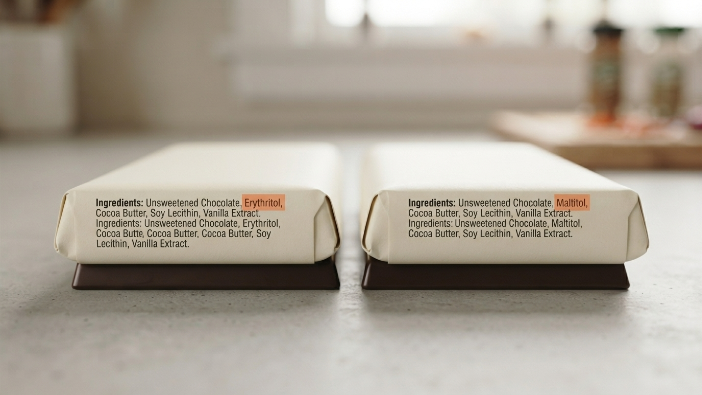
Look at which sugar alcohol is actually in there before trusting “sugar-free.” Erythritol and allulose barely register for most people’s blood sugar. Maltitol, sorbitol, and maltodextrin are a different story — they act a lot closer to real sugar than the packaging suggests.
Scan past the front of the pack and into the ingredients list itself. Maltodextrin, dextrose, corn syrup, honey, agave, fruit juice concentrate — all sugar, none of them say “sugar.”
And don’t judge the sauce by the plate it’s sitting on. A clean-looking plate of protein and vegetables can still spike you if there’s 8–10g of sugar hiding in the dressing or the glaze underneath it.
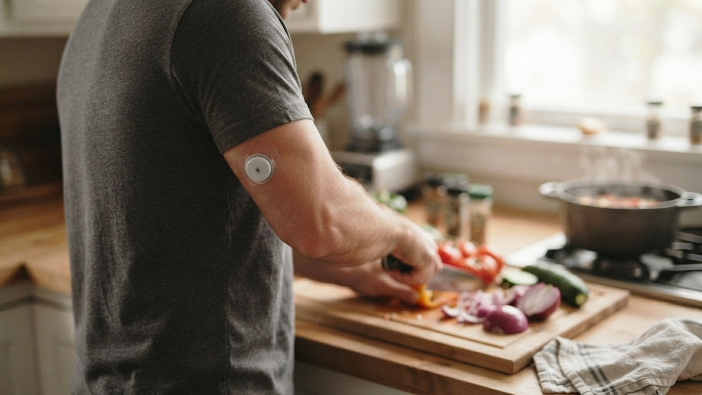
Watch for glucose response, not just carb count, if you monitor. If you use a glucose meter or CGM, a food with a low carb count that still spikes you is worth flagging individually — some responses are genuinely person-specific.
Be sceptical of “keto-certified” processed snacks as a category. Certification schemes vary in rigor; whole-food ingredients are still the most reliable way to avoid surprises.
Foods/Category Comparison Table
| Food/Category | Why It Can Raise Blood Sugar | Keto Concern | Better Keto Alternative |
| Sugary drinks (soda, juice) | Concentrated fast-digesting sugar, no fibre to slow absorption | Can use up a full day’s carb allowance in one drink | Water, unsweetened sparkling water, black tea/coffee |
| White bread, rice, pasta | Refined carbohydrate with bran/germ removed; digests quickly | Directly conflicts with the carb restriction ketosis needs | Homemade keto bread, cauliflower rice, shirataki noodles |
| Sweetened cereals & flavoured yoghurt | Added sugar plus refined grain, often under a “healthy” label | Sets a high-carb tone for the rest of the day | Eggs, plain full-fat Greek yoghurt with berries |
| Ketchup, BBQ sauce, sweet dressings | Added sugar or starch hidden in small serving sizes | Easy to overlook as “not really a food” | Mustard, mayonnaise, oil-and-vinegar dressings, sugar-free hot sauce |
| Sweet potato, corn | Moderate-to-high glycaemic starchy vegetables | Higher net carbs than non-starchy vegetables | Cauliflower, courgette, leafy greens, broccoli |
| “Keto” bars/sweets with maltitol | Maltitol is only partially digested and still raises glucose | “Sugar-free” label can be misleading for net carb tracking | Products sweetened with erythritol or allulose; whole-food snacks |
Expert Tips for Avoiding Blood Sugar Spikes on Keto
When you do eat any carbohydrate, don’t eat it alone. Pairing it with protein, fat, or fibre — a bit of vegetables and salad alongside the main meal, protein and healthy fats worked in — is a well-established way of keeping blood glucose steadier, and it holds just as true within keto when carbs sneak back in somewhere.
Low-carb and low-glycaemic are not the same thing, even though it’s tempting to treat them that way. The maltitol examples earlier make this obvious enough — a product can be genuinely low in net carbs on paper and still send your glucose up in real life.
If a product leans on sugar alcohols, do the net-carb math yourself rather than trusting the label. The general rule dietitians tend to give is straightforward: erythritol can usually be subtracted in full, but maltitol and sorbitol only get subtracted halfway, because your body actually converts part of them into glucose.
Packaged “keto-friendly” snacks are fine as a convenience now and then — just not as the backbone of how you eat. Whole foods, meat, fish, eggs, non-starchy vegetables, nuts, olive oil, are much less likely to be hiding carbs than anything that comes in a wrapper.
And if you do track your glucose, don’t read too much into any single number. A bad night’s sleep or a stressful morning can nudge a reading on its own. What actually tells you something is a spike that keeps showing up after the same food, more than once.
Ask about medication interactions if you manage diabetes. If you use insulin or a glucose-lowering medication, carbohydrate and net-carb counting for keto purposes is not the same calculation your diabetes team may use for dosing — this is a conversation to have directly with them, not something to self-manage from a blog post.
A mistake I see people make repeatedly at this stage is assuming that because a mistake was small — one sauce, one “keto” bar — it doesn’t matter. On a diet where the entire mechanism depends on keeping insulin low and steady, small, repeated hidden-carb exposures can matter more than one obviously “off-plan” meal, simply because they’re harder to notice and correct.
Individual Variation: Why This Isn’t One-Size-Fits-All
Here’s something the research keeps circling back to, and it’s worth saying plainly: the same food doesn’t hit everyone the same way. Two people can eat foods with near-identical glycaemic index values and walk away with completely different glucose readings.
Portion size matters, what else is on the plate matters, and so do things that have nothing to do with food at all — sleep, stress, your baseline metabolic health. All of it shapes what actually shows up on the meter.
It’s part of why continuous glucose monitoring has caught on even with people who don’t have diabetes — it takes “foods that spike blood sugar” out of the realm of a generic list and turns it into something specific to you.
If you have access to a CGM or are willing to test with a standard glucose meter, testing your own responses to borderline foods (sweet potato, a “keto” protein bar, a particular sauce) will tell you more about your body specifically than any general list, including this one.
Final Takeaway
The foods that spike blood sugar to avoid on keto go well beyond the obvious list of bread, rice, and sweets. The more useful skill is spotting the quieter category — sauces, “healthy”-sounding foods with sugar tucked in, and processed keto products riding on sugar alcohols that don’t act the way the label suggests.
My own approach, for what it’s worth, is to keep most meals built from whole, recognisable ingredients, treat “keto-certified” packaged snacks as something occasional rather than a daily habit, and check which sugar alcohol is in a product before I trust the net-carb number on the front.
Everyone’s glucose response is a little different, so the most reliable list is really the one you build yourself, testing against your own body — ideally with input from your GP or a registered dietitian if diabetes or insulin resistance is part of the picture alongside keto.
FAQs About Foods That Spike Blood Sugar to Avoid on Keto
What foods spike blood sugar the most on keto?
The usual suspects: sugary drinks, white bread, white rice, sweets, sweetened cereals. Anything refined and low in fibre, basically — there’s nothing there to slow digestion down, so glucose climbs fast and high. Among foods that are supposedly keto, it’s maltitol-sweetened products and sauces with sugar hiding in them that catch people out most.
Can keto-friendly foods still raise blood sugar?
Yes, and this trips people up more than anything else on this list. A food can genuinely be low net-carb, marketed accurately, and still move your glucose. Maltitol and sorbitol are the textbook case — they’re only partly digested, not inert, no matter what the front of the pack implies.
What foods should I avoid on keto if I have blood sugar concerns?
Beyond the obvious high-carb stuff, keep an eye on sauces and condiments, flavoured plant milks, sweetened yoghurts, and packaged low-carb snacks. That’s where sugar tends to hide without announcing itself.
Can sauces and condiments spike blood sugar?
They can, and it’s one of the easiest things to miss. Because you’re only using a spoonful or two, it doesn’t feel like “food” in the way a meal does — but that spoonful can still be carrying a surprising amount of added sugar or starch.
Can dairy affect blood sugar on keto?
Plain, full-fat dairy — cheese, Greek yoghurt, cream — barely moves the needle for most people. Low in carbs, and the fat and protein slow down whatever glucose response there is. It’s the flavoured, sweetened, or low-fat versions you want to watch, since stripping the fat out usually means sugar gets added back in somewhere.
Can artificial sweeteners affect blood sugar?
For most people, the non-nutritive ones — stevia, monk fruit, sucralose — have little direct effect on glucose, though the research on what they do to gut health and metabolism more broadly is still developing. Sugar alcohols are a separate conversation entirely, and as covered above, some of them (maltitol, sorbitol) absolutely do move your numbers.
Does a blood sugar spike mean I’m out of ketosis?
Not necessarily. They’re related but they’re not the same measurement. One elevated reading doesn’t mean you’ve fallen out of ketosis — but if it keeps happening because of what you’re eating, that pattern works against the low-insulin state ketosis needs to run on.
What should I eat instead of high-carb foods on keto?
Non-starchy vegetables, protein — eggs, meat, fish — and healthy fats like olive oil, avocado, and nuts. If you want a framework to build meals around, our master guide to the ketogenic diet is a decent starting point for keeping things within a low net-carb range without overthinking every meal.
How can I figure out which foods affect my blood sugar personally?
Honestly, if you have access to a glucose meter or a CGM, that’s your best answer — use it consistently around specific foods and watch what actually happens. As mentioned earlier, two people can eat the exact same thing and get genuinely different responses, so there’s a limit to how far a general list like this one can take you.
A mistake I see people make repeatedly at this stage is assuming that because a mistake was small — one sauce, one “keto” bar — it doesn’t matter. On a diet where the entire mechanism depends on keeping insulin low and steady, small, repeated hidden-carb exposures can matter more than one obviously “off-plan” meal, simply because they’re harder to notice and correct.