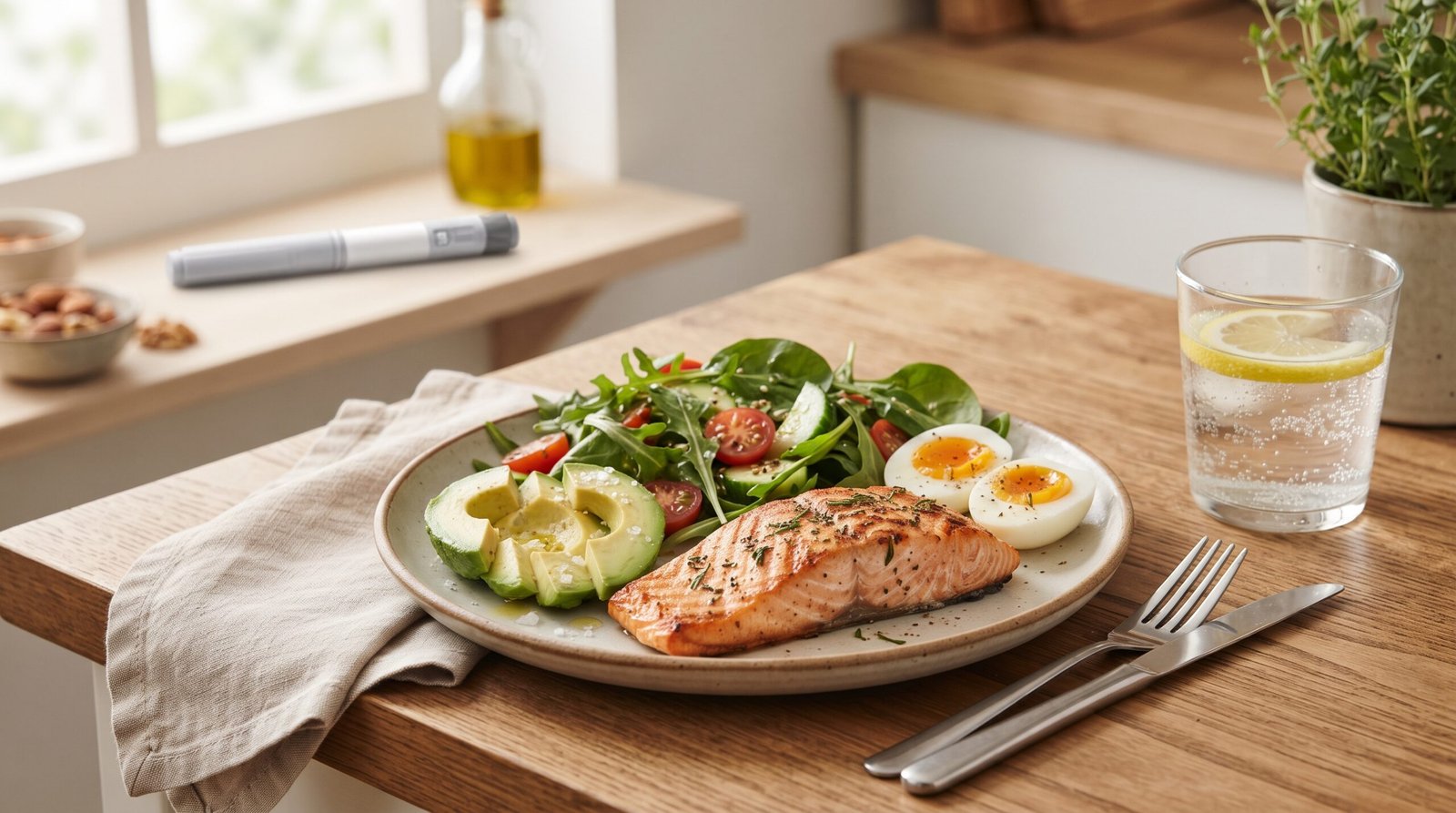
I never thought I’d be writing an article about a weekly injection pen sitting next to my ketone strips, but here we are. Over the last year, my inbox has gone from “how do I get into ketosis” to “I’ve just started Keto and Ozempic, can I still eat keto, and am I going to lose all my muscle?” almost overnight.
If you’re one of the thousands of women who message me this exact question every month, you’re not alone, and you’re asking the right question at the right time.
GLP-1 medications like Ozempic, Wegovy, and Mounjaro have completely changed the weight-loss conversation, and honestly, a lot of the advice floating around online right now is either written by people with zero nutrition training or copy-pasted from a pharma FAQ page.
I wanted to write something different — a proper, honest, nutritionist’s answer, grounded in both the clinical picture and my own experience of coaching PCOS and metabolic-health clients through exactly this combination.
So let’s get into it: can you actually do keto and Ozempic? Short answer — yes, with some real caveats. Long answer — keep reading, because the details matter far more than the headline.
Can You Really Combine Keto and Ozempic?
The first thing I tell every client who asks me this is that keto and GLP-1 medications aren’t fighting each other — if anything, they’re pulling on the same rope from two different directions.
How GLP-1 Medications Work
Semaglutide (Ozempic, Wegovy) and tirzepatide (Mounjaro, Zepbound) work by mimicking a gut hormone called GLP-1, which slows down how quickly your stomach empties, increases feelings of fullness, and reduces appetite signals from the brain.
Practically, that means most people eat significantly less without having to white-knuckle their way through hunger. It’s a genuinely different experience of appetite than anything I’ve seen in over a decade of doing this work.
How Keto Works — and Where the Overlap Is
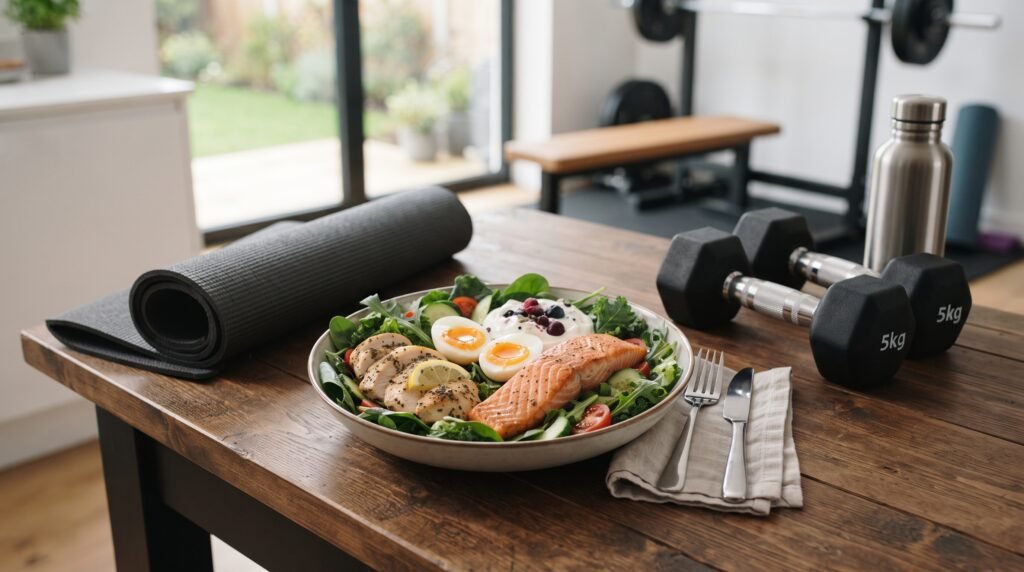
Keto, on the other hand, works by drastically restricting carbohydrate intake so your body shifts from burning glucose to burning fat for fuel, producing ketones in the process.
One of the lesser-known side effects of ketosis is that it’s naturally appetite-suppressing too — stable blood sugar and steady ketone levels tend to quiet down the hunger hormone ghrelin.
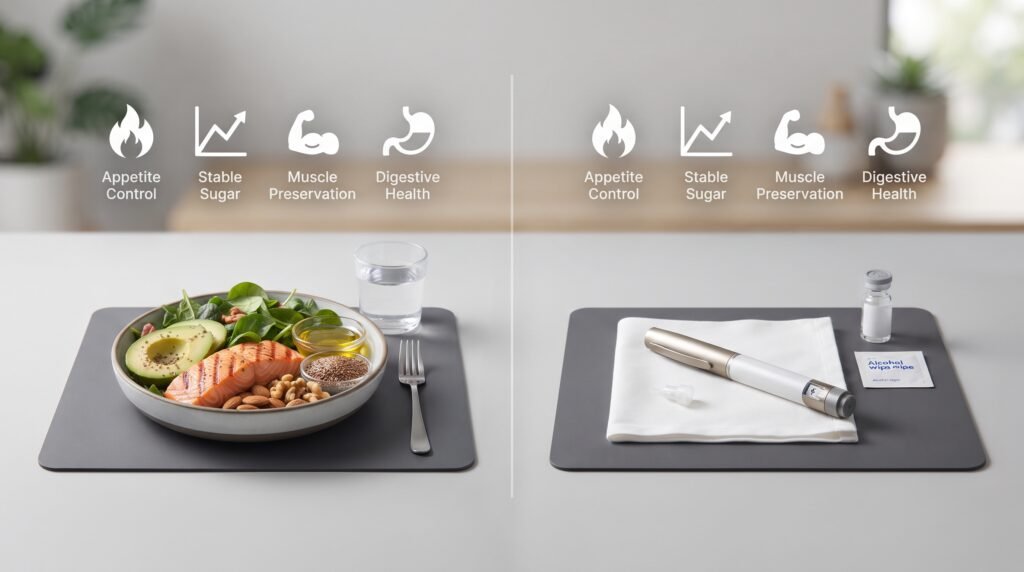
Here’s the overlap that makes this combination interesting: both approaches reduce appetite and both tend to stabilise blood sugar.
When you put them together, you get a much smaller “food window” than either approach alone — which is exactly why I think the conversation needs to shift away from “how do I lose more weight” and toward “how do I make every single bite count.” That reframe is the entire foundation of this guide.
The Science — What Studies Actually Show (2026 Update)
I’m not going to pretend there’s a mountain of long-term randomised trials specifically studying “keto plus semaglutide” — this combination has only really become common in the last couple of years, and research takes time to catch up with real-world behaviour.
What we do have is a reasonably clear picture from muscle-preservation research, metabolic studies on ketogenic diets, and clinical data on GLP-1 medications individually, which together paint a pretty consistent picture.
Muscle Preservation Data
People most concern about this; it really should be among your first priorities. Whether from a GLP-1 drug, a strong diet, or a mix of both, quick weight reduction poses a genuine risk of losing lean muscle mass alongside fat, especially if protein intake and resistance exercise are not given top priority.
Part of the clinical trial data on semaglutide and tirzepatide has revealed that particularly in individuals not consuming enough protein or leading a sedentary lifestyle a significant portion of overall weight dropped during treatment might come from lean mass instead of fat.
Here, keto does not always confer protection. In actuality, poorly designed keto diets—the kind built around bacon, cheese, and butter with almost no actual protein source—can make this worse, not better, as they are sometimes fairly low in the protein required to maintain muscle during a calorie deficit.
Blood Sugar & Insulin Sensitivity Overlap
Where the science does line up nicely is around insulin sensitivity. Ketogenic diets have consistently been shown to improve markers of insulin resistance in people with metabolic dysfunction, PCOS or prediabetes — which is a huge part of why I specialise in it.
GLP-1 medications work through a related but distinct pathway, improving insulin secretion timing and glucagon suppression. Used together, thoughtfully, they can complement each other for blood sugar stability rather than working against one another.
This is one of the genuine upsides of the combination, and it’s the piece that gets the least airtime in mainstream coverage. If PCOS and insulin resistance are part of your weight-loss journey, our guide to the best foods for PCOS weight loss explains which foods can support a lower-carb, hormone-conscious eating pattern.
My Take: Why This Combination Makes Sense for Metabolic Health
Since I think it matters, I want to be open with you about where I am here. Years before GLP-1 drugs entered the general discourse, I lost 40 kg, or 88 pounds, over roughly 18 months solely through changes in diet and lifestyle.
I did it the “hard way,” with a lot of trial and error, a lot of hunger I probably didn’t need to sit through, and a genuine PCOS diagnosis that made the whole process feel like I was fighting my own biology.
So when clients come to me now, having started Ozempic or Mounjaro, part of me feels a small pang of something like envy — appetite that quiet simply wasn’t available to me back then.
But the more clients I’ve worked with on this combination, the more my view has settled into something fairly nuanced. I don’t think keto plus a GLP-1 medication is automatically the best or worst approach — I think it’s a genuinely powerful tool that punishes carelessness more than most.
When someone is barely eating because their appetite has vanished, the quality of what little food they do eat becomes everything. There’s no room left for empty calories or “I’ll make up for it later” thinking, because there simply isn’t enough food volume left in the day to waste on things that don’t serve you.
What I’ve seen work best, consistently, is treating the GLP-1 medication as the appetite tool and keto as the metabolic and blood-sugar tool — and building a very deliberate, protein-forward, nutrient-dense eating pattern to sit underneath both.
Done that way, I’ve watched clients come off these medications with strength intact, hair not falling out, energy stable, and habits that actually hold once the prescription ends. Done carelessly, I’ve also seen the opposite — and that’s exactly why the next section matters so much.
The 3 Biggest Risks of Combining Keto + GLP-1
| Risk | Why It Happens | How to Manage It |
| Muscle loss | Reduced appetite plus carb restriction can mean total food intake drops too low to support lean tissue, especially without enough protein or resistance training | Prioritise protein at every meal, aim for consistent strength training 2–3x per week, don’t chase rapid weight loss for its own sake |
| Nutrient deficiency | Smaller meal volumes on both keto and GLP-1 medications can mean fewer total micronutrients coming in, particularly fibre, magnesium, potassium and B vitamins | Choose nutrient-dense whole foods over “keto snack” ultra-processed products, consider a food-first approach to filling gaps, discuss supplementation with your GP or dietitian |
| Worsened GI side effects | Both very low-carb eating and GLP-1 medications can independently cause constipation, and combined, this effect can compound | Prioritise fibrous low-carb vegetables, stay well hydrated, keep electrolytes balanced, don’t restrict fat too aggressively as it supports gut motility |
I’ll include a fourth, unsaid danger that often gets overlooked: undereating to cause tiredness and poor mood.
That suggests you should concentrate every meal on quality and density rather than pushing through practically vanished hunger signals if you are really unable to eat much.
Appetite loss isn’t a green light to skip meals altogether — it’s a signal to make the meals you do have count.
How Much Protein You Actually Need on GLP-1 + Keto
This is, without exaggeration, the single most important number in this entire guide. I’d rather you skim past every other section and remember this table than the other way round.
| Body Weight | Daily Protein Target (general guidance) |
| 55 kg (121 lb) | 88–110g |
| 65 kg (143 lb) | 104–130g |
| 75 kg (165 lb) | 120–150g |
| 85 kg (187 lb) | 136–170g |
| 95 kg (209 lb) | 152–190g |
These numbers show the higher end of general protein recommendations for individuals actively losing weight and attempting to preserve muscle: approximately 1.6 to 2.0g per kilogram of current body weight—a range I usually advise my own clients in this exact circumstance.
If your hunger is much less, usually you front-load protein at breakfast and lunch, when your appetite is usually somewhat more, and you rely on efficient protein sources like eggs, Greek yoghurt, whey or plant protein, fish, poultry, tofu instead than only from fatty cuts of meat.
If you prefer to avoid meat, our guide to a vegetarian keto diet without meat covers practical protein sources including eggs, paneer, tofu, Greek yogurt, and low-carb vegetables.
This is general dietary advice; it does not replace the advise of your doctor, dietitian, or the practitioner prescribing your medications; do consult them, especially if you have renal issues or other medical issues.
Sample 1-Day Keto-GLP-1 Meal Plan (Small, Nutrient-Dense Meals)
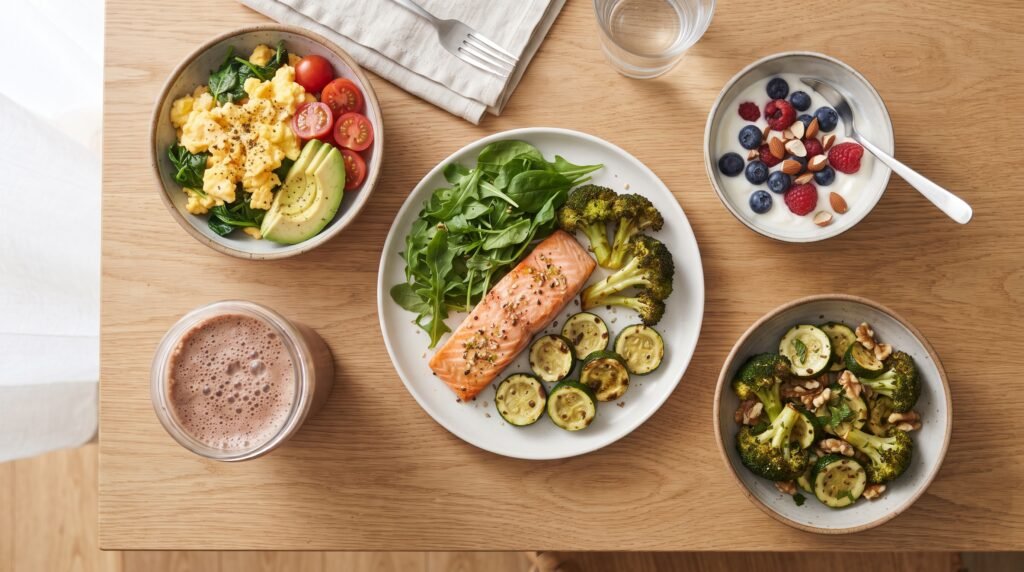
Early in a GLP-1 drug, when hunger is at its lowest and every meal has to punch above its weight, this is about what I would draw out for a customer.
Breakfast: Two scrambled eggs with a tablespoon of full-fat Greek yoghurt stirred through, a small handful of spinach wilted in, and a few slices of avocado. Small, protein-dense, gentle on the stomach.
Mid-morning (if hungry): A small protein shake made with unsweetened almond milk — useful for topping up protein without needing much stomach volume.
Lunch: Grilled chicken thigh or salmon fillet over a bed of leafy greens, cucumber and olives, dressed with olive oil and lemon. Try here for one and a half of protein if you can handle it.
Afternoon: If hunger lets, a few macadamia nuts or a tiny piece of cheese is optional and highly dependent on daily hunger.
Dinner: A small portion of slow-cooked beef or a baked white fish with roasted low-carb vegetables (courgette, broccoli, cauliflower) and a spoon of tahini or olive oil for extra calories and fat-soluble vitamin absorption.
Throughout the day: Electrolyte water, bone broth if constipation is an issue, and herbal tea in the evening.
Eating this way does not have to be expensive. For practical shopping tips and affordable meal-planning ideas, see our guide to keto on a budget in the UK.
Managing Side Effects: Nausea, Constipation, Fatigue
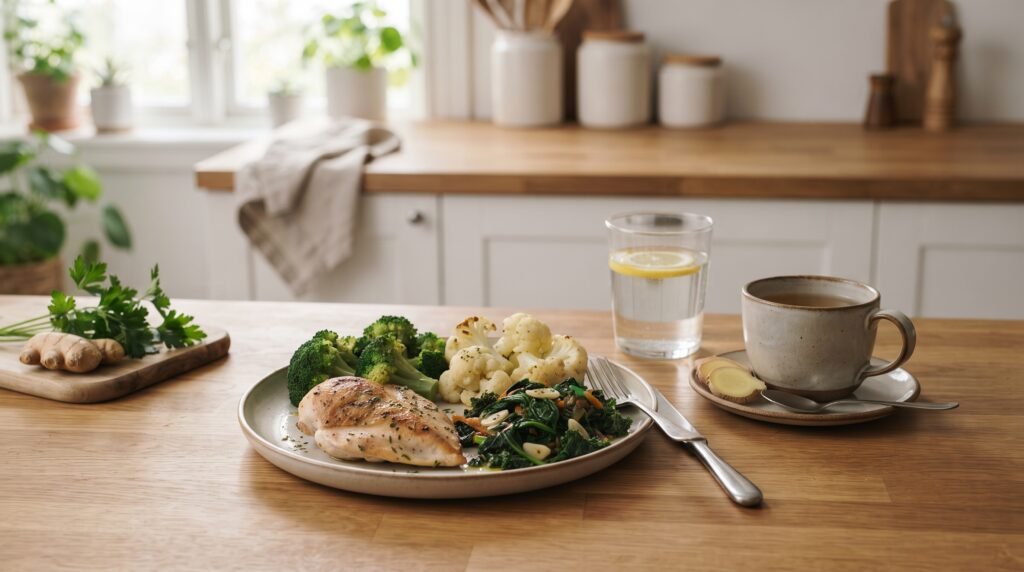
Rather than three big meals, smaller, more frequent ones help to reduce nausea, especially in the first few hours following your shot when it is usually at its worst, and with avoiding highly fried or very fatty foods.
Ginger tea and plain, room-temperature foods can help more than people expect. Constipation is genuinely one of the most common complaints I hear from clients on this combination, and it makes sense — both a low-fibre keto approach and GLP-1 medications independently slow digestion.
The remedy is straightforward but requires regularity: give fibrous low-carb veggies—like broccoli, cauliflower, courgette, and leafy greens—top importance at every meal; don’t chop fat too brutally; and remain deliberately well hydrated—not only “a glass here and there” but also a daily goal.
Usually, fatigue points to too low carbohydrate intake or overall calorie consumption for your degree of activity, or to changed electrolytes. . This is where the next section comes in.
Electrolytes on GLP-1 + Keto
If you’ve read my earlier guide on keto electrolytes, you’ll know I bang on about this constantly — but it matters even more here.
Reduced food volume from appetite suppression means you’re getting less sodium, potassium and magnesium from food than you might on a normal diet, on top of the diuretic effect ketosis already has in the first couple of weeks.
I recommend most clients in this situation actively supplement with a sugar-free electrolyte mix or salt their food more generously than they’d instinctively do, particularly in the first month of starting a GLP-1 medication.
Keto vs. Ozempic Alone — Comparison Table
| Factor | Keto Alone | Ozempic Alone | Combined |
| Appetite control | Moderate — improves over 1–2 weeks as ketosis stabilises | Strong — often immediate and pronounced | Very strong — requires deliberate meal planning to avoid under-eating |
| Blood sugar stability | Strong, especially for insulin-resistant individuals | Strong, through hormonal pathway | Complementary — two different mechanisms working together |
| Muscle preservation risk | Moderate, depends heavily on protein intake | Moderate to higher, especially with rapid loss | Higher risk if protein and strength training aren’t prioritised |
| GI side effects | Possible constipation, especially early on | Common — nausea, constipation, reflux | Compounded — needs proactive management |
| Sustainability long-term | Depends on individual adherence and enjoyment of the eating style | Depends on medication access and tolerance | Works best as a transitional strategy with a clear long-term food plan |
Common Mistakes People Make
The biggest one, by far, is treating shrinking appetite as permission to stop thinking about nutrition quality. I understand the appeal — food starts to feel almost optional, and it’s tempting to just let the scale do the talking.
But under-fuelling on protein and micronutrients now tends to show up later as hair thinning, low energy, or a frustrating plateau that has nothing to do with willpower and everything to do with your body protecting itself.
The second mistake is skipping resistance training because “the weight is coming off anyway.” Cardio and general activity are great, but strength training is genuinely one of the only levers you have to tell your body which tissue to keep during rapid weight loss.
The third is coming off the medication with no food strategy in place, expecting appetite and old habits to simply stay changed on their own. They usually don’t — the habits you build while your appetite is quiet are the ones that need to carry you afterwards.
Myths vs Facts
Myth: Keto will make Ozempic’s side effects much worse. Fact: For most people it’s manageable and sometimes even easier, since both approaches tend to reduce blood sugar swings — but the constipation risk from both does need proactive management, as covered above.
Myth: You don’t need to worry about protein because you’re eating so little anyway. Fact: This is actually backwards — smaller total food intake makes hitting your protein target more important, not less, because there’s less room for anything else.
One myth is that keto might permanently assist you in get off Ozempic. Though diet modifications can undoubtedly aid in a more seamless transition and assist to sustain results later, your prescribing doctor—not a diet plan—should always decide about beginning, modifying, or discontinuing medication.
Strict ketosis is not necessary for this combo to operate. Many of my customers do quite nicely with a more modest low-carb diet instead of strict keto, especially if rigorous ketosis is causing appetite loss and food intake to feel unbearable.
Real Keto and Ozempic Success Stories: Expert Case Studies for Better Weight Loss
These actual examples from reliable health professionals demonstrate how a well-designed keto diet and Ozempic could help to produce better, more long-lasting weight reduction results.
Dr. Stephen Phinney: Answers on Nutritional Ketosis
Under correct supervision, Dr. Phinney discusses in this interview how nutritional ketosis can help insulin resistance and type 2 diabetes. Additionally explaining why those on a ketogenic diet need enough protein consumption and medical observation.
Virta Health – Low-Carb & Diabetes
Reducing carbohydrate intake while consuming moderate protein and healthy fats can stabilize blood sugar, improve metabolic health, and reduce medication needs under medical supervision.
Exercise With GLP-1
People using semaglutide (Ozempic/Wegovy) should include strength training and regular activity since GLP-1 drugs might help to cause muscle loss during weight loss, therefore this article advises this.
Cleveland Clinic – Keto Diet Explained
Registered dietitian Sharon Jaeger explains how the ketogenic diet works, how ketosis shifts the body’s fuel source, and why the diet can benefit some people with obesity or diabetes when appropriately used.
Expert Tips for Success
Track protein before you track anything else — forget calories for a moment and just focus on hitting your daily protein number consistently.
Eat protein first at every meal, before vegetables or fats, especially on days when appetite is low and you know you won’t finish the plate.
Keep a small stash of “easy win” protein foods around — boiled eggs, tinned fish, Greek yoghurt — for the days when cooking feels like too much.
Keep a little supply of “easy win” protein foods on hand for the days when cooking seems too much: boiled eggs, canned fish, Greek yogurt.
Even if it’s only two quick home sessions each week with resistance bands, don’t miss strength training.
Weekly, not only when you start feeling ill, check on electrolytes.
Revisit your food plan every few weeks as your appetite changes, because it will — what works in week one often needs adjusting by week eight.
Final Takeaway
If there’s one thing I want you to walk away from this article with, it’s this: the medication handles your appetite, and food quality has to handle everything else. That’s really the whole philosophy in one sentence.
Protein, fibrous vegetables, electrolytes and a bit of resistance training aren’t “extra” on this combination — they’re the entire foundation that determines whether you come out the other side of this stronger, or simply smaller.
I’ve watched this combination work beautifully for clients who treated it with that kind of intention, and I’ve watched it go sideways for people who assumed appetite loss alone would do all the work.
You get to choose which version of this story is yours — and now you’ve got the actual framework to do it properly. If you’d like a done-for-you version of the meal plan above, sign up below and I’ll send over a free GLP-1-friendly keto meal plan PDF, plus my full recipe roundup as it goes live.
FAQs
Can I follow keto while taking Ozempic?
Generally, yes, and many people find the two approaches work well together, though it’s worth discussing with your GP or prescriber, particularly if you have any existing health conditions.
Does keto make Ozempic side effects worse?
Not typically for most people, though constipation can be more of an issue when both approaches are combined, so proactive fibre and hydration matter more here.
How much protein do I need on Keto and Ozempic?
As a general guide, aim for roughly 1.6–2.0g of protein per kilogram of your current body weight daily, adjusted with input from a healthcare professional if you have any relevant medical conditions.
Is low carb better than keto for GLP-1 users?
For some people, yes — a more moderate low-carb approach can be easier to sustain when appetite is already significantly reduced, and it still supports blood sugar stability without the strictness of full ketosis.
Can keto help me get off Ozempic?
Diet and lifestyle changes can support your results and help you maintain them, but any decision about stopping or adjusting medication needs to be made with your prescribing clinician, not based on a diet approach alone.





Hi,
Great guide I’ve been following a similar approach and found that combining healthy eating with professional medical support makes a big difference. I also had a positive experience using https://rolandmedicalweightloss.com/ for practical GLP-1 weight loss guidance and support. Highly recommend checking it out!